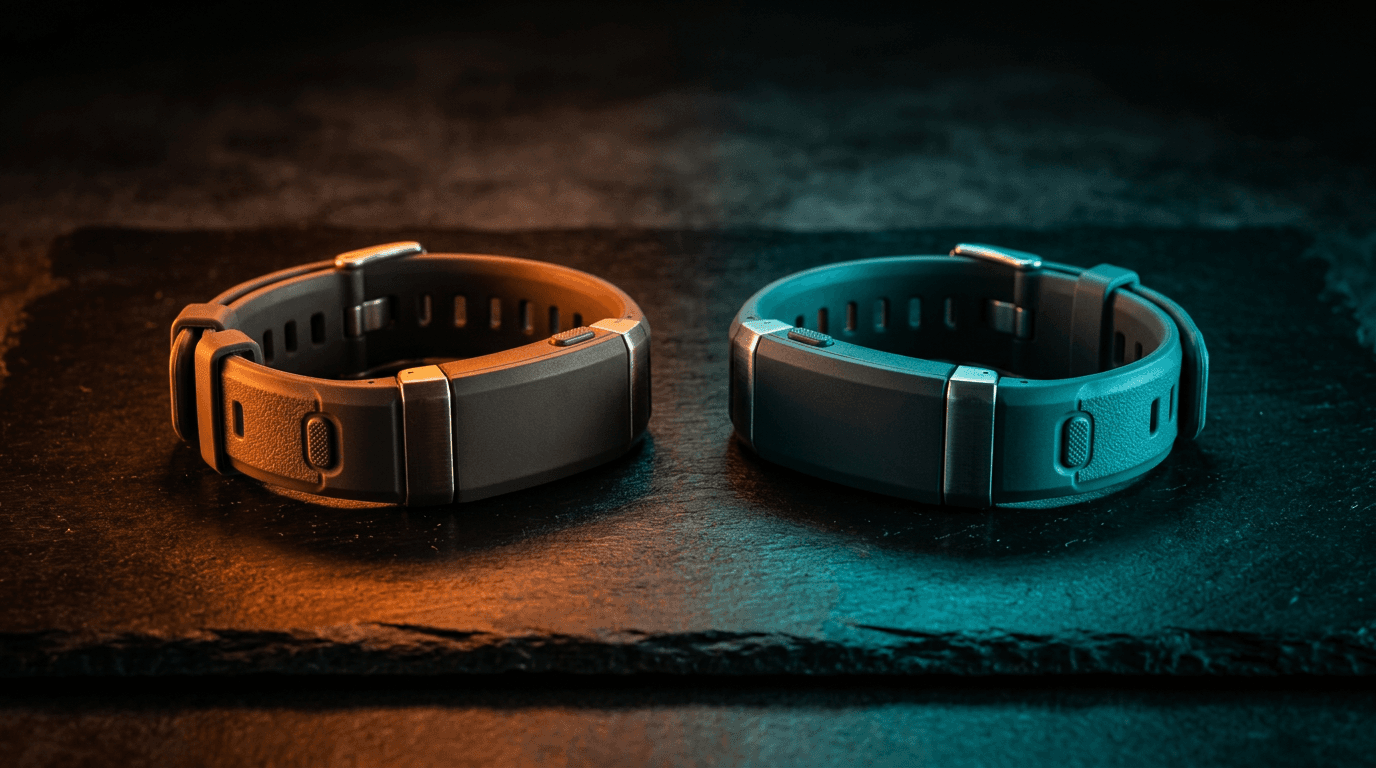
WHOOP has been the default answer to "what recovery tracker should I get?" for years. It earned that position. The data is solid, the brand is strong, and the community is large. But is WHOOP actually worth it at a landed SA cost of roughly R4,200 to R7,200 a year?
Penng is the challenger. Same screen-free, data-first philosophy. Different approach to price, battery, and what a recovery tracker should actually track.
This is the head-to-head review. No spin. Just the facts on both sides so you can decide which one fits. For the quick side-by-side with SA tier pricing, see the full Penng vs WHOOP comparison page.
The Full Comparison
| Category | WHOOP 5.0 | Penng |
|---|---|---|
| Price | $199-$359/year (~R4,200-R7,200 landed) | R1,950/year |
| 3-Year Cost | ~R12,600-R21,600 | R5,850 |
| Battery Life | 14+ days | ~21 days |
| Food Tracking | No | Yes (AI-powered) |
| Screen | No | No |
| Recovery Score | Yes (0-100%) | Yes (0-100%) |
| Strain Score | Yes (0-21) | Yes |
| Sleep Score | Yes | Yes |
| Workout Detection | Auto + manual | Manual (109+ types) |
| Water Resistance | Waterproof to 10m | 1 ATM |
| Weight | ~27g | ~40g |
| App Maturity | 10+ years | Newer |
| Community Features | Teams, leaderboards | Growing |
| Local SA Support | No (US-based) | Yes (Cape Town) |
| Currency | USD (converted) | ZAR direct |
Now let us unpack what these numbers actually mean in practice.
Price: R1,950 vs a Landed R4,200 to R7,200 Per Year
This is the most obvious difference and it compounds.
WHOOP now sells three membership tiers with the hardware included: One at $199/year, Peak at $239/year, and Life at $359/year (the Life tier is the WHOOP MG with ECG, AFib detection, and blood pressure insights). WHOOP ships to South Africa via DHL and collects the 15% VAT upfront, so the landed year-1 cost is roughly R4,200 to R7,200 depending on tier and the exchange rate. Local importers charge more, roughly R5,900 to R11,300.
Penng costs R1,950 upfront, which includes the band, charger, and your first 12 months of membership, renewing yearly. Three years: R5,850. Five years: R9,750.
Both are subscriptions. Both require ongoing payment to access features and data. But Penng's price lands between half and a quarter of WHOOP's landed SA cost, depending on the tier, and it is in rand, so renewals do not move with the exchange rate.
Battery: 21 Days vs 14+ Days
This used to be a rout. It is now an honest win.
WHOOP 5.0 runs 14+ days, a big improvement over the old 4-day WHOOP 4.0, and the sliding battery pack still lets you charge without taking the band off. Charging is no longer WHOOP's weak spot.
Penng's 21-day battery means you charge it once every three weeks. For most people, that is once or twice a month. You essentially forget about charging. When you travel, you probably do not even need the cable.
Roughly 21 days against 14+. Both are good. Penng is better, and WHOOP 5.0 closed most of the old gap, so we will not oversell this one. For sleep tracking especially, every extra day matters: a dead band overnight is a dead night of data.
Food Tracking: Penng's Biggest Edge
This is where the comparison gets interesting.
WHOOP tracks strain, recovery, and sleep. It tells you how hard you trained, how well you recovered, and how you slept. What it does not tell you is what you ate or how your nutrition affected any of those scores.
That is a significant blind spot. Recovery is not just about sleep and rest. What you eat directly impacts HRV, sleep quality, inflammation, and next-day readiness. Ignoring nutrition in a recovery tracker is like monitoring a car's engine temperature but ignoring the fuel gauge.
Penng builds AI food tracking directly into the same app. Five input methods: snap a photo of your meal, scan a barcode, type a description, use voice-to-text, or photograph a nutrition label. The AI estimates macros and calories. Everything lives in one place. You see your strain, your food, your sleep, and your recovery in a single system.
WHOOP users who want food tracking need a separate app (MyFitnessPal, Cronometer, etc.) and the discipline to maintain it. Most people start strong and stop within a few weeks. Having it built into your recovery tracker eliminates that friction.
No other recovery-focused wearable offers integrated food tracking. This is genuinely unique to Penng.
Recovery and Strain Scores
Both devices track recovery and strain. The approach is similar. HRV, resting heart rate, and sleep performance feed into a recovery score each morning. Cardiovascular load throughout the day feeds into a strain score.
WHOOP has the edge on algorithm maturity. Its recovery model has been refined over more than a decade with input from professional sports teams, university research, and millions of users. The journal feature (correlating behaviours with recovery trends) is particularly strong.
Penng's algorithms are newer but cover the same physiological inputs. Both use personalised baselines rather than generic population averages. Both produce a traffic light system (green, yellow, red) that makes daily decisions simple.
For most users, the practical difference is small. Both tell you when to push and when to rest. WHOOP's edge matters most at the elite athlete level where marginal accuracy improvements translate to competitive advantage.
Sleep Tracking
Both devices prioritise sleep. Both track time in bed, sleep stages (light, deep, REM), disturbances, and overall sleep quality. Both calculate a sleep score.
WHOOP adds sleep coaching: a personalised target for how much sleep you need based on recent strain. This is a useful feature that helps you plan bedtime rather than just review the morning after.
Both are screen-free, which helps sleep tracking accuracy. No light from your wrist during the night. No temptation to check notifications at 2am.
Sleep tracking quality is comparable for everyday use. WHOOP's larger dataset gives it a slight refinement edge, but both devices will accurately flag poor sleep and help you see patterns over time.
Water Resistance
This is one area where WHOOP clearly wins.
WHOOP 5.0 is waterproof to 10 metres. It handles swimming, showers, rain, and sweat without concern.
Penng is rated at 1 ATM. That covers sweat, rain, and hand washing. You should not swim with it or wear it in the shower as a habit.
If swimming is part of your training, this matters. If it is not, 1 ATM covers every other scenario you will encounter in a normal day.
App and Community
WHOOP's app has over a decade of development behind it. It is polished, feature-rich, and deeply integrated. The journal, strain coach, community teams, and performance assessments create a comprehensive ecosystem.
Penng's app is younger. It covers the core features well (scores, food tracking, workout logging) but has fewer bells and whistles. Integrations with third-party platforms are still growing.
WHOOP's community is large and active. If social accountability, team challenges, and leaderboards drive your motivation, WHOOP delivers this better than any competitor.
Penng's community is smaller but growing. For users who just want their own data without the social layer, this is not a drawback.
For South Africans Specifically
This deserves its own section.
WHOOP prices in USD. You pay through an international subscription, deal with exchange rate fluctuations, and customer support operates from the US on US time zones.
Penng is built in Cape Town. Pricing is in Rand. Support is local. No import duties, no currency conversion, no waiting for US business hours to resolve an issue.
For South African users, this alone shifts the equation significantly.
The Verdict
Choose WHOOP if:
- You are a professional or competitive athlete where marginal data accuracy matters.
- Community features, team leaderboards, and social accountability are important to you.
- You value the most mature app and the deepest sports science pedigree.
- Budget is not a primary concern.
Choose Penng if:
- You want recovery, strain, and sleep tracking at between half and a quarter of WHOOP's landed SA cost.
- Food tracking alongside recovery data matters to you (and it should).
- You prefer rand pricing that does not move with the exchange rate at renewal.
- You are in South Africa and want local support, ZAR pricing, and no import friction.
- You want the same health insights without the premium price tag.
WHOOP is the established leader with a larger community and more refined app. That is real.
Penng is the smarter value proposition with features WHOOP does not offer. That is also real. See the full Penng vs WHOOP page for the side-by-side, or explore our 7 cheaper alternatives to WHOOP.
For most people who want to train smarter, recover better, and actually understand how their food connects to their performance, Penng delivers more for less.
Frequently Asked Questions
Is Penng as accurate as WHOOP for recovery tracking?
Both devices track similar physiological inputs: HRV, resting heart rate, and sleep performance. WHOOP additionally tracks respiratory rate and skin temperature, which Penng does not. Both use personalised baselines rather than population averages. WHOOP's algorithm has over a decade of refinement while Penng's is newer, but for most users the practical difference in daily decision-making is small.
Can Penng replace WHOOP?
For most users, yes. Penng offers the same core metrics in a screen-free band, adds AI food tracking which WHOOP does not have, offers 21-day battery life versus WHOOP 5.0's 14+ days, and costs between half and a quarter of WHOOP's landed SA price depending on tier. WHOOP's advantages are a more mature app, larger community, and better water resistance.
Why is Penng so much cheaper than WHOOP?
Penng is built in Cape Town with lower operational costs. It uses a direct-to-consumer model with no retail markup, and Rand-based pricing avoids the exchange rate premium that WHOOP's USD pricing carries for South African buyers.
Does Penng have a community like WHOOP?
Penng's community features are still growing. WHOOP has a large, established user base with team leaderboards, group challenges, and social accountability features. If community-driven motivation is a primary factor, WHOOP currently has the edge.
Curious how your recovery stacks up? Take the free quiz at penng.ai/quiz and find out in 2 minutes.