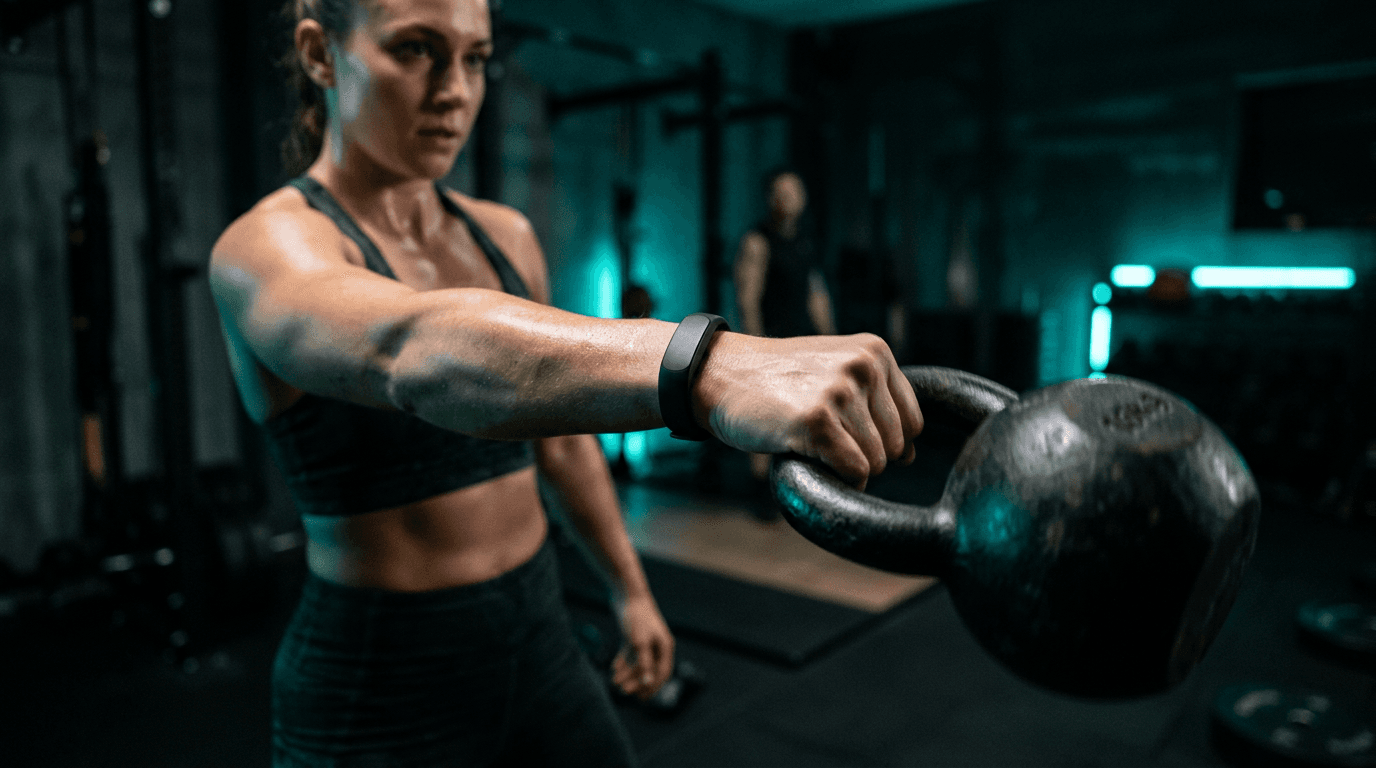
WHOOP set the standard for recovery tracking. Screen-free design. Strain, recovery, and sleep scores. Data-driven training.
It also set the standard for pricing. WHOOP's three tiers run $199 to $359 per year with the hardware included, which lands in South Africa at roughly R4,200 to R7,200 for year 1 once DHL shipping and the 15% VAT are added. We cover whether WHOOP is actually worth that price in detail, and we put it side by side with Penng on our Penng vs WHOOP comparison page. Over three years you are spending roughly R12,600 to R21,600, depending on tier and the exchange rate.
If you want the insights without that price tag, you have options. Seven of them, actually.
1. Penng (R1,950/year)
The closest match to WHOOP at half to a quarter of the landed cost.
Penng mirrors WHOOP's core philosophy. Screen-free strap. Strain score. Recovery score. Sleep score. All the metrics that matter, delivered through the app rather than a display on your wrist.
Where Penng pulls ahead: AI food tracking is built in. Snap a photo, scan a barcode, type a description, use voice input, or photograph a nutrition label. Macros and calories tracked alongside your recovery data. WHOOP does not do this. No other recovery tracker does this.
Battery life is 21 days versus 14+ on WHOOP 5.0. You charge it roughly once a month.
Made in Cape Town with local support and ZAR pricing. No import hassles for South African users.
Best for: Anyone who wants WHOOP's core features plus food tracking at a fraction of the cost.
What you miss vs WHOOP: Smaller community, younger app, fewer sports integrations. Water resistance is 1 ATM (sweat and rain, not swimming).
2. Amazfit Helio Ring ($99 one-time)
Budget-friendly ring with no subscription.
The Amazfit Helio Ring targets the sleep and readiness crowd at a price point that makes Oura nervous. No monthly subscription. One payment. Done.
It tracks sleep stages, HRV, blood oxygen, and skin temperature. Readiness scores are basic but functional. Pairs with Amazfit's Zepp app for a reasonable data experience.
Best for: People who want basic recovery data without any ongoing cost.
What you miss vs WHOOP: No strain score. Activity tracking is minimal. Recovery algorithms are less sophisticated. You get a starting point, not a training system.
3. Oura Ring Gen 4 (~R6,000 + ~R100/month)
The sleep tracking king in ring form.
Oura is not really "cheaper" than WHOOP over time. The ring costs around R6,000 upfront and the subscription adds roughly R100 per month. Over three years that is about R9,600.
But the sleep tracking is genuinely the best in the business. Detailed staging, temperature trends, readiness scores based on 20+ inputs. If your main goal is understanding and improving sleep, Oura is hard to beat.
Best for: Sleep-obsessed users who want the most discreet form factor.
What you miss vs WHOOP: No real strain score. Activity tracking is basic. No food tracking. The ring form factor means less consistent heart rate accuracy during intense workouts.
4. Garmin Vivosmart 5 (~R3,500 one-time)
A solid fitness band from a trusted name.
Garmin has been making fitness trackers longer than most companies on this list have existed. The Vivosmart 5 tracks heart rate, sleep, stress, blood oxygen, and basic activity. Body Battery (Garmin's version of a readiness score) is useful and reasonably accurate.
No subscription. A small OLED screen shows notifications and basic stats.
Best for: People who want a reliable tracker from an established brand with no ongoing fees.
What you miss vs WHOOP: Body Battery is simpler than WHOOP's recovery algorithm. No dedicated strain score. No food tracking. It is a fitness tracker first, a recovery tool second.
5. Fitbit Charge 6 (~R3,000 one-time)
Google-backed, with a strong health ecosystem.
The Charge 6 offers heart rate monitoring, sleep tracking, stress management, SpO2, and a Daily Readiness Score. Google's acquisition has improved the software side noticeably. Integration with Google Health and YouTube workout videos adds value.
GPS is built in. The screen shows real-time stats.
Best for: General fitness tracking with a mature app ecosystem and Google integration.
What you miss vs WHOOP: The Daily Readiness Score is less granular than WHOOP's recovery algorithm. No strain score equivalent. No food tracking (though MyFitnessPal integration is available as a workaround). Fitbit Premium subscription unlocks the best features.
6. Samsung Galaxy Fit 3 (~R1,500 one-time)
The budget pick.
At roughly R1,500 with no subscription, the Galaxy Fit 3 is the cheapest option on this list. It covers the basics: heart rate, sleep, steps, stress. The AMOLED screen is surprisingly good for the price. Battery life stretches to about two weeks.
Samsung Health app is clean and functional. Pairs well with Galaxy phones (less seamlessly with iPhones).
Best for: People on a tight budget who want basic health tracking without a subscription.
What you miss vs WHOOP: No recovery score. No strain score. Sleep tracking is basic. This is a fitness tracker, not a recovery system. The gap in data quality is significant.
7. Apple Watch SE (~R5,000 one-time)
The everything watch.
The Apple Watch SE is not a recovery tracker. It is a smartwatch that happens to track health. Notifications, apps, payments, calls. It does everything. Health tracking includes heart rate, sleep, workout detection, and basic recovery insights through third-party apps.
No subscription (unless you count iCloud). Excellent build quality.
Best for: iPhone users who want a smartwatch first and health tracking second.
What you miss vs WHOOP: No native strain or recovery scores. Sleep tracking requires wearing it to bed (which means charging during the day). Battery life is 18 hours. The health data exists but you need third-party apps to make it actionable for recovery.
The Quick Comparison
| Device | Price | Subscription | Recovery Score | Strain Score | Food Tracking | Battery |
|---|---|---|---|---|---|---|
| Penng | R1,950/yr | Included | Yes | Yes | Yes (AI) | 21 days |
| Amazfit Helio | ~$99 | None | Basic | No | No | ~4 days |
| Oura Ring | ~R6,000 | ~R100/mo | Yes | Basic | No | ~7 days |
| Garmin Vivosmart 5 | ~R3,500 | None | Body Battery | No | No | ~7 days |
| Fitbit Charge 6 | ~R3,000 | Optional | Basic | No | No | ~7 days |
| Galaxy Fit 3 | ~R1,500 | None | No | No | No | ~14 days |
| Apple Watch SE | ~R5,000 | None | Via apps | Via apps | Via apps | ~18 hrs |
The Bottom Line
WHOOP is a great product. The question is whether a landed R4,200 to R7,200 per year is justified when alternatives deliver 80 to 100% of the value for significantly less. For the full breakdown, see our best recovery trackers of 2026 comparison, or the dedicated Penng vs WHOOP page.
If you want the closest feature match to WHOOP, Penng is the obvious choice. Same screen-free, data-first approach. Same strain, recovery, and sleep scores. Plus food tracking that WHOOP does not offer. At R1,950 per year, it is the best value recovery tracker available.
If you want the best sleep tracker, go Oura. If you want a general fitness band with no subscription, Garmin or Fitbit. If you want a smartwatch, Apple Watch SE.
But if you want what WHOOP actually sells (the ability to train smarter using your body's data) without the WHOOP price tag, start with Penng.
Frequently Asked Questions
What is the cheapest WHOOP alternative with recovery tracking?
Penng at R1,950 per year is the most affordable alternative that matches WHOOP's core features: strain score, recovery score, sleep score, and screen-free design. It also includes AI food tracking, which WHOOP lacks.
Can I get WHOOP-level data without the subscription cost?
The Garmin Vivosmart 5 at approximately R3,500 with no subscription offers Body Battery, which is Garmin's version of a readiness score. For the closest match to WHOOP's depth at lower price, Penng at R1,950 per year includes strain, recovery, sleep, and food tracking.
Do WHOOP alternatives track HRV?
Most recovery-focused alternatives track HRV, including Penng, Oura Ring, Garmin, and Fitbit with Premium. Budget trackers like Xiaomi Band and Samsung Galaxy Fit do not offer meaningful HRV analysis.
Which WHOOP alternative has the best battery life?
Penng has the longest battery at 21 days. WHOOP 5.0 lasts 14+ days. Samsung Galaxy Fit 3 lasts approximately 14 days. Garmin Vivosmart 5 and Fitbit Charge 6 both get approximately 7 days.
Curious how your recovery stacks up? Take the free quiz at penng.ai/quiz and find out in 2 minutes.