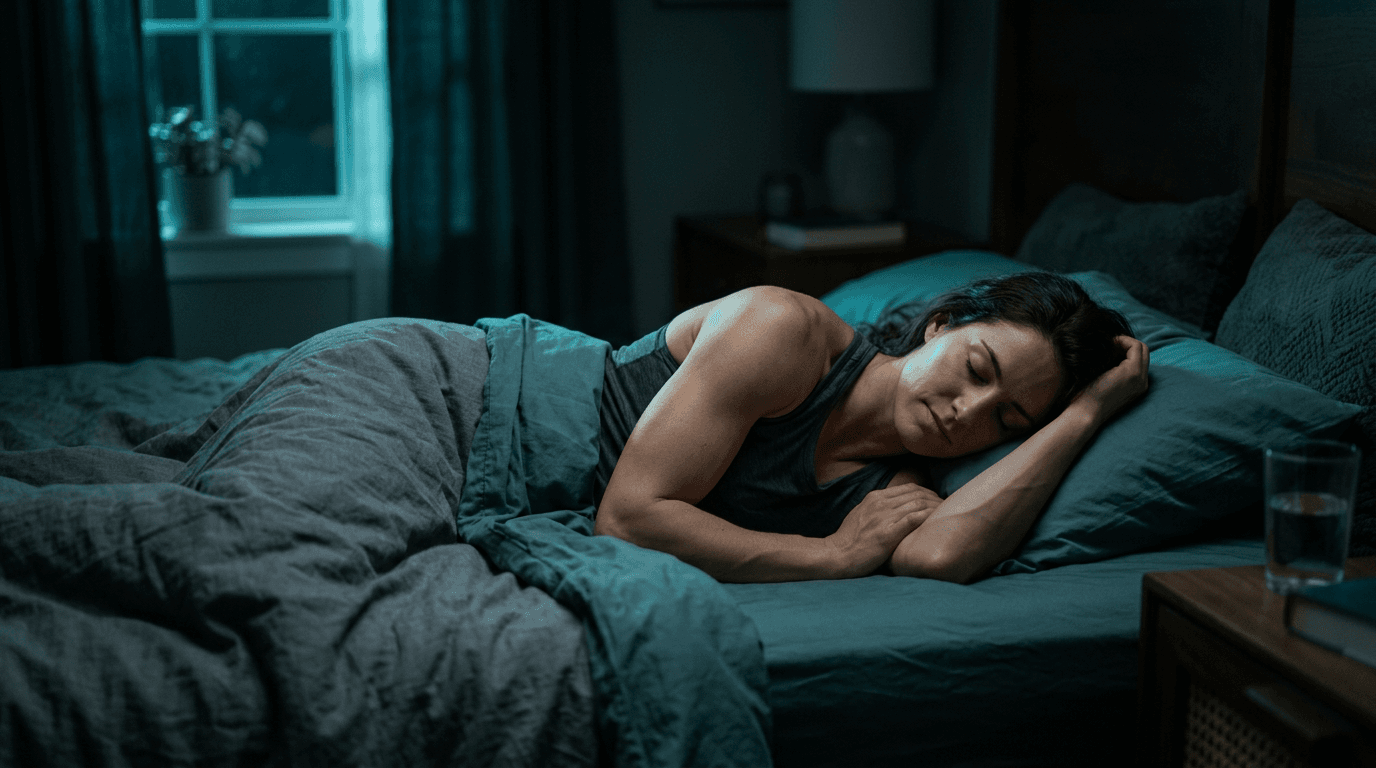
There is a saying in strength training circles: you do not get stronger in the gym. You get stronger when you recover from the gym.
Training creates the stimulus. It breaks down muscle fibres, depletes energy stores, and stresses your cardiovascular and nervous systems. The actual adaptation — the part where you get fitter, stronger, and more resilient — happens during recovery. And the single most important recovery period is sleep.
This is not motivational advice. It is physiology. The hormonal, cellular, and neural processes that repair and strengthen your body are overwhelmingly concentrated during sleep. Cut your sleep short, and you cut your recovery short. It is that direct.
Here is what the science says about how sleep drives muscle recovery, what happens when you do not get enough, and how to use sleep data alongside your training to optimise results.
What Happens to Your Muscles During Sleep
Growth Hormone Release
Human growth hormone (HGH) is the primary driver of tissue repair and growth. In adults, 70-80% of daily HGH secretion occurs during sleep, with the largest pulse happening during the first bout of deep sleep (NREM3) — typically within the first 90 minutes of falling asleep.
HGH does several things that matter for athletes:
- Stimulates protein synthesis — the process of building new muscle proteins
- Promotes the repair of damaged muscle fibres
- Helps mobilise fat for energy, preserving muscle glycogen
- Supports the repair of connective tissue (tendons, ligaments)
When you sleep less, you produce less HGH. One study published in the Journal of the American Medical Association found that restricting sleep to 5 hours per night reduced HGH secretion by 60-70% compared to 8 hours. That is not a subtle effect. It is a dramatic reduction in your body's primary repair hormone.
Protein Synthesis
Muscle protein synthesis (MPS) — the process of building new muscle tissue — does not stop during sleep. In fact, overnight is a critical period for MPS.
During the day, MPS is stimulated by exercise and protein intake. During sleep, the body continues this process using amino acids from your last meal. Research shows that MPS rates overnight contribute significantly to total daily muscle building.
This is why pre-sleep protein intake has become a standard recommendation in sports nutrition. Consuming 20-40 grams of protein before bed provides the amino acids needed to fuel overnight MPS. Casein protein is often recommended because it digests slowly, providing a sustained amino acid supply through the night. For more on nutrition strategies that support recovery, see our guide to the best foods for recovery.
Inflammation and Immune Function
Exercise causes inflammation. This is normal and even necessary — inflammation is part of the repair signal that tells your body to rebuild. But the resolution of inflammation, where the body shifts from damage mode to repair mode, depends heavily on sleep.
During deep sleep, the immune system produces anti-inflammatory cytokines. These proteins help resolve exercise-induced inflammation and facilitate tissue repair. Sleep deprivation shifts the balance toward pro-inflammatory cytokines, meaning inflammation persists longer and recovery takes more time.
Chronic sleep restriction has been shown to increase markers of systemic inflammation, including C-reactive protein and interleukin-6. For athletes, this means that poor sleep does not just slow recovery — it creates an environment of chronic low-grade inflammation that impairs training adaptation over time.
Glycogen Replenishment
Muscle glycogen — the stored carbohydrate that fuels intense exercise — is replenished during rest periods, including sleep. While glycogen restoration is primarily driven by carbohydrate intake, the hormonal environment during sleep (lower cortisol, elevated growth hormone) supports efficient glycogen storage.
Sleep deprivation impairs glycogen replenishment. Athletes who sleep poorly may start their next training session with incompletely restored glycogen stores, leading to earlier fatigue and reduced performance.
Neural Recovery
Strength is not just about muscle. It is about the nervous system's ability to recruit muscle fibres effectively. High-intensity training fatigues the central nervous system (CNS), and neural recovery occurs primarily during sleep.
This is why grip strength and reaction time — both measures of neural function — are among the first performance metrics to decline with sleep deprivation. Your muscles might feel fine, but your nervous system's ability to generate maximal force is compromised.
What Sleep Deprivation Does to Performance
The research on sleep deprivation and athletic performance is remarkably consistent. Even modest sleep restriction has measurable effects.
One Night of Poor Sleep
A single night of restricted sleep (4-5 hours) has been shown to:
- Reduce time to exhaustion by 11%
- Decrease maximal voluntary contraction (strength) by 5-10%
- Impair reaction time by 10-15%
- Increase perceived exertion — the same workout feels harder
- Reduce accuracy in sports requiring precision (shooting, tennis serves)
These effects are noticeable but recoverable. One bad night will not derail your training. But it does make that day's session less productive and increases injury risk due to impaired coordination and reaction time.
Chronic Sleep Restriction
This is where the real damage occurs. Sleeping 6 hours or less per night over multiple weeks creates cumulative deficits that significantly impair recovery and performance:
- Reduced muscle mass gains. A study in the Annals of Internal Medicine found that sleep-restricted subjects (5.5 hours vs 8.5 hours) lost 60% more muscle mass and 55% less fat during a caloric deficit. Sleep deprivation shifts the body's response from fat loss toward muscle loss.
- Increased injury risk. Research on adolescent athletes found that those sleeping less than 8 hours per night had 1.7 times the injury rate of those sleeping 8+ hours. Similar patterns are observed in adult athletes.
- Hormonal disruption. Chronic sleep restriction reduces testosterone by 10-15% in young men (equivalent to ageing 10-15 years hormonally), increases cortisol (a catabolic hormone that breaks down tissue), and impairs insulin sensitivity.
- Impaired motor learning. New skills and movement patterns are consolidated during sleep. Athletes who sleep poorly after learning new techniques show reduced skill retention.
The cruel irony is that hard training increases your sleep need. The more intensely you train, the more deep sleep your body requires for recovery. Training hard while sleeping poorly creates a growing gap between the damage you are doing and your body's ability to repair it.
Optimal Sleep Duration for Athletes
The general recommendation is 7-9 hours for adults. But athletes may need more.
Research from Stanford University's sleep researchers showed that when basketball players extended their sleep to 10 hours per night for 5-7 weeks, they experienced:
- Faster sprint times
- Improved shooting accuracy (free throw and three-point)
- Improved reaction time
- Reduced fatigue ratings
- Better mood
These improvements came not from any change in training but purely from sleeping more.
The American Academy of Sleep Medicine and the International Olympic Committee both recommend 7-9 hours for adult athletes, with a note that individual needs vary. Some athletes may genuinely need 9-10 hours, particularly during heavy training blocks.
How do you know if you need more? Two questions:
- Do you need an alarm to wake up? If yes, you are probably not getting enough.
- Do you feel sleepy during the afternoon? Occasional sleepiness is normal, but consistent afternoon fatigue suggests insufficient sleep.
Napping as a Recovery Strategy
Naps are not just for children. For athletes, strategic napping can supplement overnight sleep and enhance recovery.
Benefits of napping:
- A 20-30 minute nap improves alertness, reaction time, and mood without causing grogginess
- Naps can partially compensate for overnight sleep loss
- Post-exercise naps may enhance muscle recovery by providing an additional window for HGH release
Napping guidelines:
- Keep naps to 20-30 minutes to avoid entering deep sleep (which causes grogginess upon waking)
- Nap before 3 PM to avoid interfering with nighttime sleep
- Do not use naps as a substitute for adequate overnight sleep — they are a supplement, not a replacement
- If you cannot fall asleep during a nap, quiet rest still provides some recovery benefit
Elite athletes frequently incorporate naps into their daily routine. Many professional sports teams include designated nap times in their training schedules.
How to Track Sleep Alongside Training
One of the most valuable things you can do for your training is connect your sleep data to your performance data. Patterns emerge that you would never notice from intuition alone.
What to Track
- Sleep duration and staging. Total time, deep sleep minutes, REM minutes. Look for nights where deep sleep was unusually low and note what happened the day before (late training, alcohol, stress, caffeine).
- Recovery score. Penng provides a recovery score (0-100%) using a green/yellow/red traffic light system. This score incorporates sleep quality alongside HRV and resting heart rate. It tells you whether your body is ready for intense training or needs a lighter day.
- Strain score. Penng tracks cardiovascular load as a strain score (0-100). Comparing your strain to your recovery reveals whether you are balancing training and recovery effectively.
- Training performance. Note your workout quality — how weights felt, energy levels, motivation, and perceived exertion.
What Patterns to Look For
- High strain + low sleep = declining recovery. If you are training hard but sleeping poorly, your recovery score will trend downward over days. This is an early warning sign of overtraining.
- Good sleep + improving recovery = readiness for progression. When sleep is consistent and recovery scores are stable or improving, you can push training intensity.
- Deep sleep dropping after evening workouts. Some people find that late-night training impairs their deep sleep. If the data confirms this pattern, shifting workouts earlier can help.
- Recovery score vs. training quality. Over time, you will notice that your best training sessions correlate with green recovery scores and good sleep the night before. This makes the case for prioritising sleep as a performance tool, not a luxury.
How Penng Helps
Penng tracks sleep stages (light, deep, REM), overnight HRV, resting heart rate, SpO2, and calculates both a sleep score (0-100) and a recovery score (0-100%, green/yellow/red). Because the band has approximately 21-day battery life, you get continuous data without gaps from charging.
The combination of sleep, recovery, and strain data in one app makes it straightforward to spot the connections between how you sleep and how you perform. Penng also includes AI food tracking — five input methods for logging what you eat — which adds the nutrition dimension to the recovery picture. No other recovery wearable combines body tracking and food tracking in a single app.
Practical Recommendations
Based on the research, here is what to prioritise:
Aim for 7-9 hours of sleep. Adjust upward during heavy training blocks. If you are training hard and sleeping 6 hours, you are likely underrecovering.
Protect the first 3-4 hours. The majority of deep sleep occurs in the first half of the night. Going to bed earlier (not just sleeping more by waking later) tends to increase deep sleep.
Eat protein before bed. 20-40 grams of slow-digesting protein (casein, Greek yoghurt, cottage cheese) provides amino acids for overnight muscle protein synthesis.
Time training wisely. Intense training in the morning or afternoon leaves enough time for your body to wind down before bed. Late evening training can impair deep sleep.
Use recovery data to guide training. If your recovery score is low after a poor night's sleep, reduce training intensity. Pushing through on poor recovery creates diminishing returns and increases injury risk.
Consider strategic naps. A 20-minute post-lunch nap can supplement overnight sleep, especially during intensive training periods.
Be consistent. Regular sleep and wake times support your circadian rhythm, which in turn supports the hormonal processes that drive recovery.
The Bottom Line
Sleep is not passive. It is the most anabolic state your body enters. The hormonal environment, the cellular repair processes, and the neural recovery that occur during sleep are not optional extras — they are essential components of training adaptation.
You can have the best training programme, perfect nutrition, and ideal supplementation. If you are not sleeping enough, you are leaving results on the table. Worse, you are increasing your risk of injury and burnout.
The strongest athletes are not just the ones who train the hardest. They are the ones who recover the best. And recovery starts with sleep.
Frequently Asked Questions
How many hours of sleep do athletes need?
Most sports science guidelines recommend 7-9 hours for adult athletes, with some individuals requiring up to 10 hours during heavy training periods. The key indicator is whether you can wake up naturally without an alarm and feel rested. If you consistently need an alarm and feel fatigued, you likely need more sleep.
Does a bad night of sleep ruin my workout?
One bad night will not undo your fitness. You may notice 5-10% reductions in strength and endurance, increased perceived exertion, and slower reaction times. The workout will be less productive but not worthless. The real damage comes from chronically poor sleep over weeks and months.
Should I eat before bed to help muscle recovery?
Yes. Consuming 20-40 grams of protein before bed provides amino acids for overnight muscle protein synthesis. Good options include Greek yoghurt, cottage cheese, casein protein shake, or a small portion of chicken or turkey. Avoid large, heavy meals within 2-3 hours of bed, but a protein-focused snack is beneficial.
Can naps replace lost sleep for recovery?
Naps can partially compensate for overnight sleep loss but are not a full replacement. A 20-30 minute nap improves alertness and may provide a small window for growth hormone release. However, the deep sleep and REM cycles that occur during a full night cannot be replicated in a short nap. Use naps as a supplement, not a substitute.
How does sleep affect fat loss during a cut?
Sleep has a dramatic impact on body composition during caloric restriction. Research shows that sleep-restricted individuals (5.5 hours vs 8.5 hours) lost 60% more lean muscle mass and 55% less fat during the same caloric deficit. Adequate sleep helps preserve muscle and promotes fat oxidation during a cut.
Want to understand how your sleep is affecting your training results? Take the free quiz at penng.ai/quiz and get personalised insights in 2 minutes.