You can train with perfect programming, sleep eight hours every night, and still recover poorly if your nutrition is wrong.
Training breaks your body down. Exercise creates microscopic tears in muscle fibres, depletes glycogen stores, increases inflammation, and generates oxidative stress. This is not a bad thing — it is the stimulus for adaptation. But the adaptation only happens if you give your body the raw materials to rebuild.
Those raw materials come from food.
Recovery nutrition is not about finding a magic superfood. It is about consistently providing your body with the right combination of protein, carbohydrates, micronutrients, and anti-inflammatory compounds in the hours and days after training. Here is what works, what does not, and how to build recovery-supporting meals without overcomplicating things.
Why Nutrition Is Half the Recovery Equation
When people talk about recovery, they usually focus on passive strategies: sleep, rest days, foam rolling, compression garments. These matter. But they only address one side of recovery — reducing the demands on your body.
The other side is actively supporting repair. Your body needs:
- Amino acids (from protein) to repair damaged muscle fibres
- Glucose (from carbohydrates) to replenish glycogen stores
- Micronutrients (vitamins, minerals) to support enzymatic processes involved in repair
- Anti-inflammatory compounds to manage the inflammation response without suppressing it entirely
- Water and electrolytes to replace what was lost through sweat
Skip any of these, and recovery slows. Your next session suffers. Over time, inadequate recovery nutrition compounds into chronic fatigue, increased injury risk, and stalled progress.
This is not theoretical. Research consistently shows that athletes who optimise their post-training nutrition recover faster, maintain higher training quality, and experience fewer illnesses and injuries across a training season.
The Top Recovery Foods
1. Salmon
Salmon is arguably the single best recovery food. It provides high-quality complete protein (roughly 25g per 150g serving), omega-3 fatty acids (EPA and DHA), vitamin D, and B vitamins.
The omega-3s are the standout feature. EPA and DHA have well-documented anti-inflammatory properties. They do not block inflammation (which would impede the recovery process) but help resolve it more efficiently. Research suggests that omega-3 supplementation reduces delayed onset muscle soreness (DOMS) and may accelerate the recovery of muscle function after intense exercise.
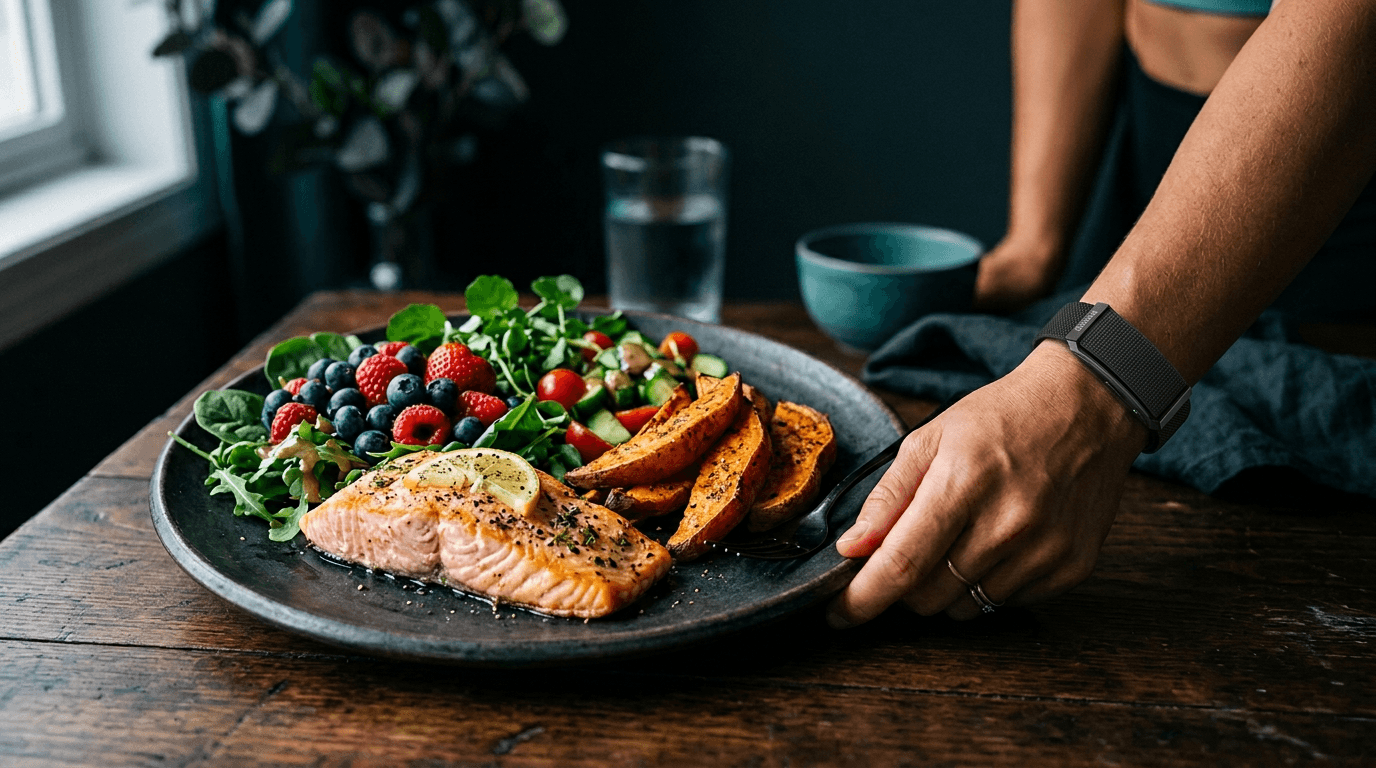
How to use it: Grilled salmon with sweet potato and leafy greens makes a near-perfect recovery meal. Aim for 2-3 servings of oily fish per week.
2. Eggs
Eggs are the Swiss army knife of nutrition. Six eggs provide approximately 36g of complete protein with all essential amino acids in excellent bioavailable proportions. They also contain choline (important for brain function and muscle contraction), vitamin D, B12, and healthy fats.
Research from the University of Illinois found that consuming whole eggs (not just egg whites) after resistance training stimulated muscle protein synthesis more effectively, likely due to the nutrients in the yolk working synergistically with the protein.
How to use them: Scrambled, poached, or as an omelette with vegetables within a few hours of training. Affordable and quick to prepare — which matters when you are tired after a session.
3. Sweet Potato
Sweet potatoes are a recovery powerhouse for carbohydrate replenishment. After intense training, your muscle glycogen stores are depleted — sweet potatoes provide complex carbohydrates for steady glycogen restoration, along with beta-carotene (a potent antioxidant), vitamin C, potassium, and manganese.
Unlike simple sugars that spike and crash blood glucose, the complex carbs in sweet potato provide sustained energy. The potassium content also helps replace electrolytes lost through sweat.
How to use it: Baked, roasted, or mashed as a side with your protein source. A medium sweet potato provides roughly 27g of carbohydrates.
4. Greek Yoghurt
Greek yoghurt combines protein (~15-20g per 200g serving) with probiotics that support gut health. Your gut plays a larger role in recovery than most people realise — gut bacteria influence systemic inflammation, nutrient absorption, and immune function. Hard training temporarily suppresses immune function, so supporting your gut microbiome is a legitimate recovery strategy.
Greek yoghurt also contains calcium (bone health), B12, and a combination of whey and casein proteins. The casein digests slowly, providing a sustained release of amino acids — which makes it particularly good as an evening recovery snack.
How to use it: Post-training with berries and a drizzle of honey, or before bed for overnight amino acid delivery. Choose plain yoghurt and add your own fruit to avoid the excessive sugar in flavoured varieties.
5. Berries (Blueberries, Strawberries, Mixed Berries)
Berries are packed with anthocyanins and other polyphenols — powerful antioxidants that help manage exercise-induced oxidative stress. A 2012 study in the Journal of the International Society of Sports Nutrition found that blueberry consumption before and after strenuous exercise accelerated the recovery of peak isometric muscle strength.
Berries also provide vitamin C (important for collagen synthesis and immune function), fibre, and natural sugars for quick glycogen replenishment.
How to use them: Mixed into Greek yoghurt, added to smoothies, or eaten as a post-training snack. Fresh or frozen — frozen berries are picked at peak ripeness and retain their nutrient content well. In South Africa, frozen mixed berries from retailers like Pick n Pay or Checkers are affordable and available year-round.
6. Tart Cherry Juice
Tart cherry juice is one of the few recovery foods with robust clinical evidence. Multiple studies have found that tart cherry juice reduces muscle soreness, decreases markers of muscle damage (creatine kinase), and improves recovery of muscle function after intense exercise.
The mechanism is the high concentration of anthocyanins and other anti-inflammatory compounds. Tart cherries also contain natural melatonin, which may support sleep quality — another critical recovery factor.
How to use it: 250ml of tart cherry juice (or 30ml concentrate diluted) twice daily — once in the morning and once before bed — on hard training days. Note: tart cherry juice is different from regular cherry juice. Look for Montmorency cherry products specifically. These can be harder to find in South Africa, but health food shops and online retailers stock them.
7. Leafy Greens (Spinach, Kale, Swiss Chard)
Dark leafy greens are mineral-dense — providing magnesium, iron, calcium, potassium, and vitamin K. Magnesium is particularly important for recovery: it is involved in over 300 enzymatic reactions including muscle contraction, protein synthesis, and energy metabolism. Research suggests that many athletes are deficient in magnesium, which can impair recovery and increase muscle cramps.
Leafy greens also provide nitrates, which research has linked to improved blood flow and oxygen delivery to muscles. Better blood flow means faster delivery of nutrients to damaged tissue and faster removal of metabolic waste products.
How to use them: As a base for salads, sauteed as a side dish, or blended into smoothies. If you struggle to eat enough greens, a handful of spinach in a post-training smoothie is virtually tasteless but nutritionally significant.
8. Nuts and Seeds (Almonds, Walnuts, Pumpkin Seeds)
Nuts provide healthy fats, protein, magnesium, zinc, and vitamin E. Walnuts are particularly noteworthy for their omega-3 content (alpha-linolenic acid, the plant-based form). Pumpkin seeds are exceptionally high in zinc and magnesium — both minerals that support recovery and immune function.
The calorie density of nuts makes them an efficient way to support recovery without eating large volumes of food. A 30g handful of almonds provides roughly 170 calories, 6g protein, 14g healthy fat, and meaningful amounts of magnesium and vitamin E.
How to use them: As a snack between meals, mixed into yoghurt, sprinkled on salads, or as nut butter on toast. Be mindful of portion sizes — nuts are calorie-dense, which is a benefit when you need the energy but can contribute to unwanted weight gain if consumed mindlessly.
What to Eat Within Two Hours Post-Training
The first two hours after training are not a rigid window, but they are a practical one. Your body is primed for recovery — muscle protein synthesis is elevated, glycogen synthase activity is increased, and nutrient uptake is enhanced.
Target these within your post-training meal:
- Protein: 20-40g from a quality source (eggs, chicken, fish, Greek yoghurt, protein shake)
- Carbohydrates: 0.8-1.2g per kilogram of body weight if you trained intensely (a 75kg person needs 60-90g of carbs)
- Vegetables: At least one serving for micronutrients and fibre
Sample post-training meals:
- Grilled chicken breast (150g) with sweet potato (200g) and steamed broccoli — ~40g protein, ~50g carbs
- Three-egg omelette with mushrooms, spinach, and two slices of wholewheat toast — ~28g protein, ~30g carbs
- Salmon fillet with brown rice (150g cooked) and a mixed green salad — ~35g protein, ~45g carbs
- Protein shake (30g whey) blended with a banana, handful of berries, and a tablespoon of peanut butter — ~35g protein, ~40g carbs
If you are not hungry immediately after training, that is normal — exercise suppresses appetite in many people. Have the meal as soon as your appetite returns. Forcing food down when nauseous does more harm than good.
Hydration and Electrolytes
Recovery nutrition is incomplete without hydration. During training, you lose water and electrolytes (primarily sodium, potassium, and small amounts of magnesium and calcium) through sweat. Inadequate rehydration impairs every aspect of recovery — nutrient delivery, waste removal, muscle function, and cognitive performance.
How much to drink: A practical guideline is 1.5 litres of fluid for every kilogram of body weight lost during training. If you do not weigh yourself before and after sessions, aim for pale yellow urine within 2-3 hours post-training as a simple marker.
Electrolyte replacement: For sessions under 60-90 minutes, water and a normal meal will replace what you lost. For longer or more intense sessions (especially in hot conditions), adding electrolytes is worthwhile. Commercial electrolyte drinks work, but so does adding a pinch of salt to water and eating potassium-rich foods (bananas, sweet potatoes, leafy greens).
Anti-Inflammatory Foods vs Anti-Inflammatory Drugs
Here is an important distinction: the inflammation from exercise is not something you want to completely suppress. It is part of the signalling process that triggers adaptation. Taking anti-inflammatory drugs (NSAIDs like ibuprofen) after training has been shown to blunt the adaptive response — less muscle protein synthesis, less satellite cell activation, less strength gain over time.
Anti-inflammatory foods work differently. Foods like salmon, berries, leafy greens, and turmeric do not suppress the inflammatory response in the same way NSAIDs do. They help resolve inflammation more efficiently once it has served its purpose, without blocking the initial signalling.
Translation: Eat anti-inflammatory foods. Avoid reaching for ibuprofen after training unless you have actual pain that needs medical management.
Foods to Limit Post-Training
Some foods actively hinder recovery:
Alcohol. Even moderate alcohol consumption after training impairs muscle protein synthesis, disrupts sleep architecture, increases dehydration, and blunts growth hormone release. A beer after a braai is a social choice, not a recovery strategy.
Excessive processed sugar. While some carbs are needed post-training, a massive sugar hit (energy drinks, sweets, chocolate bars) causes a rapid insulin spike followed by a crash. This roller coaster can impair your appetite for the quality meal you actually need.
High-fat fast food. Fat slows digestion. While dietary fat is important overall, a greasy meal immediately after training delays the delivery of protein and carbs to your muscles. Save the drive-through for a rest day (if at all).
Excessive caffeine. Caffeine after late-afternoon or evening training can disrupt sleep — and sleep is when your body does the majority of its recovery work. If you train after 3pm, consider limiting caffeine to pre-workout only.
South African Recovery Meal Ideas
Building recovery meals with locally available foods:
- Post-morning training: Scrambled eggs with avo on wholewheat toast, side of fruit
- Post-lunch training: Grilled chicken with butternut and steamed green beans
- Post-evening training: Baked salmon with roasted sweet potato and spinach salad
- Quick option: Biltong (50g) with a banana and a handful of nuts
- Budget option: Tinned pilchards on wholewheat toast with sliced tomato
- Braai night recovery: Choose lean cuts (chicken breast, ostrich) over boerewors, add a large salad, and drink water alongside anything else
How Penng Connects What You Eat to How You Recover
Understanding recovery nutrition in theory is one thing. Seeing it work in your own data is another.
When you log your post-training meals and your recovery data comes from the same device, patterns become visible. You might notice that on days you eat a high-protein recovery meal within two hours of training, your recovery score the next morning is consistently 5-10 points higher. Or that skipping post-training nutrition consistently tanks your sleep score.
Penng tracks both sides — food intake through AI-powered tracking (photo, barcode, text, voice, and nutrition label input) and body recovery through continuous heart rate variability, sleep staging, and strain monitoring. The food data includes a full macro breakdown — protein, carbs, fat, fibre, sodium, sugars — so you can see exactly what you consumed and correlate it with how your body responded.
These are not hypothetical insights. They are patterns that emerge from your own data after a few weeks of consistent tracking. And once you see the connection between a well-timed recovery meal and a green recovery score the next morning, the motivation to eat well after training stops being theoretical and becomes personal.
The Bottom Line
Recovery nutrition is not complicated. Eat protein and carbs within a couple of hours of training. Include anti-inflammatory foods regularly. Stay hydrated. Eat vegetables. Do not drink alcohol on hard training days if recovery matters to you.
The foods listed here are not exotic or expensive. Eggs, sweet potatoes, tinned fish, frozen berries, leafy greens, nuts — all widely available and affordable in South Africa. You do not need supplements or special products. You need consistent, quality food timed around your training.
Your body does the recovering. Your food provides the building blocks. Give it what it needs.
Frequently Asked Questions
What should I eat immediately after a workout?
Aim for a meal or snack containing 20-40g of protein and 40-90g of carbohydrates within a couple of hours post-training. Good options include grilled chicken with sweet potato, eggs on toast, a protein shake with banana, or Greek yoghurt with berries. The exact timing is not critical — within a few hours is fine, especially if you ate before training.
Are anti-inflammatory foods better than ibuprofen for recovery?
For exercise recovery, yes. NSAIDs like ibuprofen suppress the inflammatory signalling that triggers muscle adaptation, potentially reducing gains over time. Anti-inflammatory foods (salmon, berries, leafy greens, turmeric) help resolve inflammation more efficiently without blocking the adaptive signals. Save anti-inflammatory drugs for actual injury or pain management, not routine post-training soreness.
Does alcohol after training hurt recovery?
Yes, significantly. Research shows that alcohol impairs muscle protein synthesis, disrupts sleep architecture (particularly deep sleep and REM sleep), increases dehydration, and reduces growth hormone release. Even moderate consumption — two to three drinks — after training measurably slows recovery. If recovery is a priority, avoid alcohol on training days.
What is the best recovery food on a budget in South Africa?
Eggs and tinned pilchards are hard to beat for cost-effective recovery nutrition. Six eggs provide about 36g of protein for around R20-25. Two tins of pilchards provide roughly 40g of protein with omega-3 fatty acids for under R40. Combine with sweet potato or wholewheat bread (both affordable) and you have a complete recovery meal for under R60.
How does sleep affect recovery nutrition?
Sleep is when your body performs the majority of muscle repair and glycogen restoration. Poor sleep reduces growth hormone release, impairs protein synthesis, and increases cortisol — all of which slow recovery. Eating a protein-rich snack before bed (such as Greek yoghurt or cottage cheese) may support overnight muscle protein synthesis, and avoiding large meals, caffeine, and alcohol close to bedtime helps protect sleep quality.
Take the free quiz at penng.ai/quiz to find out how your post-training nutrition and recovery habits stack up — and get personalised recommendations.