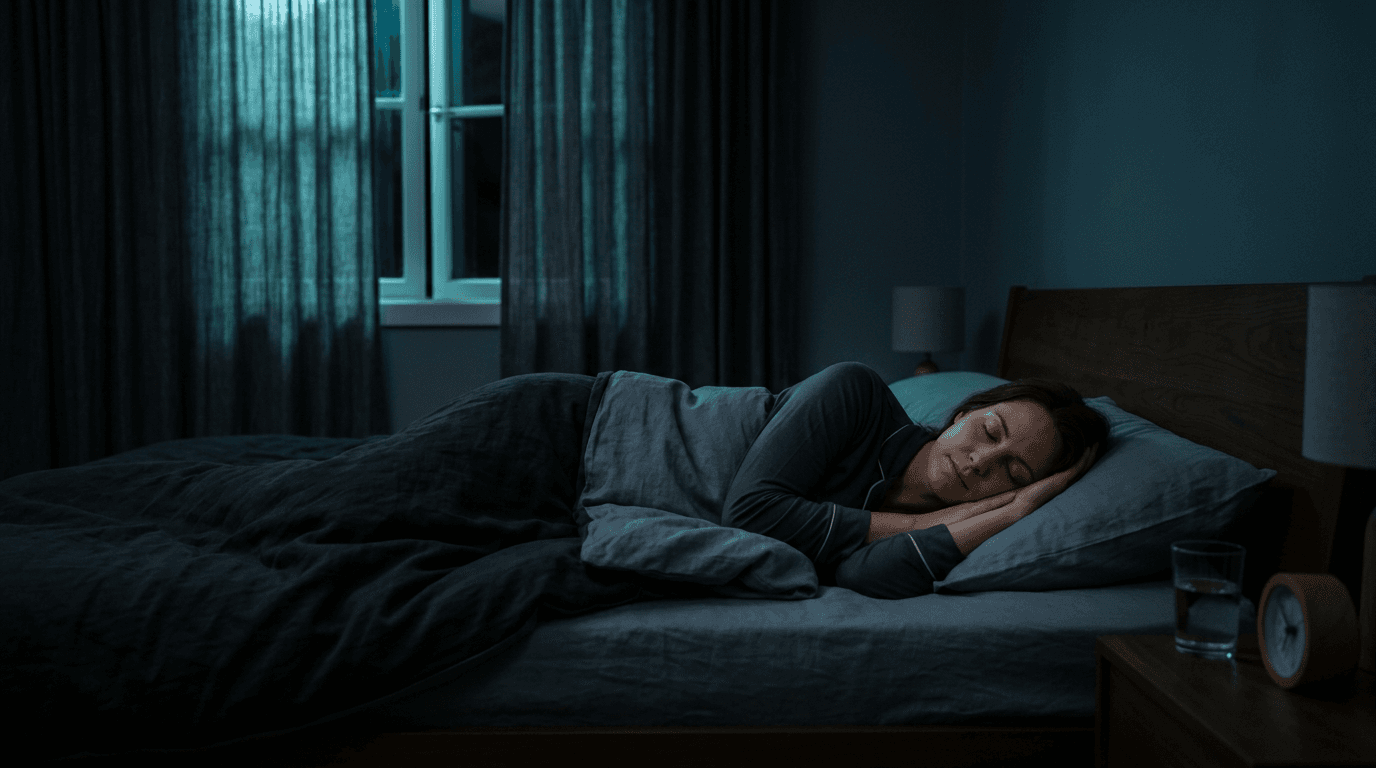
Deep sleep is the most physically restorative stage of sleep. It is when your body releases the majority of its growth hormone, repairs damaged tissue, strengthens your immune system, and clears metabolic waste from your brain.
Most adults need 1 to 2 hours of deep sleep per night. But many people get far less than that — and the consequences show up as slow recovery, persistent fatigue, weakened immunity, and poor training adaptation.
The good news is that deep sleep is not entirely outside your control. While genetics and age play a role, your habits have a significant impact on how much deep sleep you get each night.
Here are 10 strategies backed by research. Not vague advice. Specific, actionable changes you can make starting tonight.
1. Keep a Consistent Sleep Schedule
Your body's circadian rhythm — the internal clock that regulates when you feel alert and when you feel sleepy — thrives on consistency. Going to bed and waking up at the same time every day, including weekends, is the single most powerful thing you can do for sleep quality.
Research consistently shows that irregular sleep schedules are associated with less deep sleep and more time in lighter stages. When your circadian rhythm is aligned, your body "expects" sleep at a certain time and moves into deep sleep stages more efficiently.
This does not mean you need to be rigid to the minute. A 30-minute window is fine. But the person who sleeps 10:30 PM to 6:30 AM every night will typically get more deep sleep than someone who alternates between 11 PM and 1 AM bedtimes.
What to do: Pick a bedtime and wake time that you can maintain seven days a week. Set an alarm to remind you to start winding down, not just to wake up.
2. Cool Your Bedroom to 18-20 Degrees Celsius
Your core body temperature needs to drop by about 1 degree Celsius to initiate and maintain sleep. A cool room makes this process easier.
Studies have shown that ambient temperatures between 18-20 degrees Celsius (65-68 degrees Fahrenheit) are optimal for sleep. Temperatures above 24 degrees Celsius significantly reduce deep sleep and increase wakefulness during the night.
The mechanism is straightforward. When your environment is cool, your body can offload heat through your skin more efficiently. This temperature drop signals the brain that it is time for deep sleep.
What to do: Set your thermostat or fan to keep the bedroom between 18-20 degrees Celsius. If you do not have air conditioning, a fan pointed away from you (to circulate air) and lightweight bedding can help. Some people find that cooling their feet and hands specifically (counterintuitively, by warming them with socks first to dilate blood vessels) helps with the initial temperature drop.
3. Time Your Exercise Right
Exercise is one of the most reliable ways to increase deep sleep. Regular physical activity increases both the amount and the intensity of slow-wave sleep. But timing matters.
Research suggests that morning and afternoon exercise produce the greatest deep sleep benefits. Exercise raises your core body temperature, and the subsequent cooling effect several hours later aligns with your body's natural pre-sleep temperature drop.
Late evening exercise — particularly intense cardio or heavy strength training within 2-3 hours of bedtime — can impair sleep onset and reduce deep sleep. The elevated heart rate, cortisol, and body temperature take time to come down.
That said, light exercise like walking or gentle yoga in the evening is generally fine and may even help with relaxation.
What to do: Schedule your most intense workouts in the morning or afternoon. If evening is your only option, finish at least 3 hours before bed and choose moderate intensity over maximum effort.
4. Reduce Alcohol Consumption
This is the one nobody wants to hear. Alcohol is one of the most reliable deep sleep destroyers.
Alcohol is a sedative, so it can make you fall asleep faster. But sedation is not sleep. What alcohol actually does is suppress REM sleep in the first half of the night and fragment sleep in the second half. It also significantly reduces deep sleep quality.
Even moderate drinking — two to three standard drinks — has been shown to reduce deep sleep by 20-40%. The effect is dose-dependent: more alcohol means less deep sleep.
The mechanism involves several factors. Alcohol disrupts the production of adenosine (a sleep-promoting chemical), increases sympathetic nervous system activity (elevating heart rate), and causes dehydration. You can see these effects clearly in your HRV data — nights with alcohol typically show suppressed HRV and elevated resting heart rate. Alcohol's impact on recovery is so significant that it deserves its own discussion in the context of how alcohol affects recovery.
What to do: If deep sleep is a priority, limit alcohol to 1-2 drinks and stop drinking at least 3-4 hours before bed. Better yet, experiment with alcohol-free weeks and compare your sleep data. The difference is usually striking.
5. Manage Blue Light Exposure
Blue light from screens suppresses melatonin production. Melatonin is the hormone that signals your brain it is time to sleep. When melatonin is suppressed, sleep onset is delayed and the quality of early sleep cycles — where most deep sleep occurs — is compromised.
The research here is clear but sometimes overstated. Blue light is not poison. Natural sunlight contains far more blue light than any screen. The issue is timing: blue light exposure in the 1-2 hours before bed delays the melatonin signal at exactly the wrong moment.
What to do: Dim screens or use night mode settings starting 1-2 hours before bed. Better still, put screens away 30 minutes before sleep. If you must use devices, blue-light-blocking glasses can help, though the evidence for their effectiveness is mixed. The most reliable approach is simply reducing screen time before bed.
6. Control Caffeine Timing
Caffeine has a half-life of 5 to 6 hours. That means if you drink a cup of coffee at 4 PM, half of that caffeine is still in your system at 10 PM. A quarter is still there at 4 AM.
Caffeine blocks adenosine receptors in the brain. Adenosine is a chemical that builds up during the day and promotes sleepiness. By blocking these receptors, caffeine keeps you feeling alert — but it also directly interferes with the depth of your sleep, particularly deep sleep.
Research has shown that caffeine consumed even 6 hours before bed can reduce deep sleep by over 20%. And many people who say "caffeine does not affect my sleep" are simply unaware of the impact because they fall asleep fine. Falling asleep is not the problem. The quality of sleep after you fall asleep is where caffeine does its damage.
What to do: Set a caffeine cutoff at least 8 hours before bed. If you go to sleep at 10 PM, no caffeine after 2 PM. This includes coffee, tea, energy drinks, pre-workout supplements, and dark chocolate. If you are particularly sensitive, you may need a 10-hour cutoff.
7. Reduce Stress and Lower Cortisol
Cortisol is the body's primary stress hormone. It follows a natural rhythm: high in the morning (to wake you up) and low at night (to allow sleep). Chronic stress disrupts this pattern, keeping cortisol elevated in the evening and directly suppressing deep sleep.
When cortisol is elevated at bedtime, your nervous system stays in a sympathetic (fight-or-flight) state. This is the opposite of the parasympathetic (rest-and-digest) state needed for deep sleep. Addressing chronic stress is one of the most effective ways to improve your HRV, which in turn supports deeper sleep.
What to do: Build a wind-down routine that actively reduces cortisol:
- Breathing exercises. Box breathing (4 seconds in, 4 seconds hold, 4 seconds out, 4 seconds hold) or 4-7-8 breathing activates the parasympathetic nervous system.
- Journalling. Writing down worries or a to-do list for tomorrow clears the mental clutter that keeps your brain active.
- Progressive muscle relaxation. Systematically tensing and relaxing muscle groups signals the body to shift into rest mode.
- Limit news and social media before bed. These are reliable cortisol elevators.
8. Optimise Your Nutrition
What you eat — and when you eat — affects deep sleep more than most people realise.
Avoid heavy meals within 2-3 hours of bed. Digestion raises core body temperature and keeps your metabolism active, both of which work against deep sleep. A light snack is fine, but a large meal is not.
Consider foods that support sleep. Several nutrients have been linked to improved sleep quality:
- Magnesium is involved in over 300 enzymatic processes, including those that regulate the nervous system. Many people are mildly deficient. Foods rich in magnesium include dark leafy greens, nuts, seeds, and dark chocolate. Magnesium glycinate or threonate supplements (200-400mg before bed) have shown promise in some studies for improving sleep quality.
- Tryptophan is an amino acid that serves as a precursor to serotonin and melatonin. Foods rich in tryptophan include turkey, chicken, eggs, cheese, and nuts.
- Tart cherry juice is one of the few foods with measurable melatonin content. Some studies show modest improvements in sleep duration and quality.
Avoid high-sugar foods before bed. Blood sugar spikes and subsequent crashes can cause awakenings during the night.
9. Control Light and Noise in Your Bedroom
Your sleep environment has a direct impact on how much time you spend in deep sleep.
Darkness. Even small amounts of light can suppress melatonin and reduce deep sleep. Your eyelids are thinner than you think — light penetrates them. Streetlights, standby LEDs on electronics, and early morning sunlight all contribute.
Noise. While you may "get used to" noise, your brain still processes it during sleep. Background noise increases the likelihood of transitioning from deep sleep to lighter stages. You may not wake up fully, but you lose deep sleep minutes.
What to do:
- Use blackout curtains or a sleep mask. Total darkness is the goal.
- Remove or cover any electronic LEDs in the bedroom.
- Use earplugs or a white noise machine. White or pink noise can mask disruptive sounds without causing awakenings.
- Keep your phone outside the bedroom or in do-not-disturb mode.
10. Evaluate Supplement Options (With Realistic Expectations)
Supplements are not magic. But a few have reasonable evidence behind them for supporting deep sleep:
- Magnesium glycinate or threonate (200-400mg). The most commonly recommended sleep supplement. Helps with relaxation and may support deeper sleep, particularly if you are deficient.
- L-theanine (100-200mg). An amino acid found in tea that promotes relaxation without sedation. Some studies show it improves sleep quality and reduces sleep onset time.
- Glycine (3g). An amino acid that lowers core body temperature and may improve deep sleep quality. Research is limited but promising.
- Ashwagandha (300-600mg). An adaptogen that may help reduce cortisol levels and improve sleep quality in people with stress-related sleep issues.
What to avoid: Melatonin is often recommended for sleep, but it primarily helps with sleep onset and circadian rhythm issues, not deep sleep specifically. It is also chronically overused. Most over-the-counter melatonin doses (5-10mg) are far higher than what the body produces naturally (0.1-0.3mg). If you use melatonin, start with the lowest dose available.
Important note: Talk to a healthcare professional before starting any supplement, especially if you take medication. Supplements are not a substitute for the habits listed above.
How to Measure Whether It Is Working
Making changes is only half the equation. You need to know if those changes are actually improving your deep sleep.
This is where sleep tracking becomes valuable. A wearable that tracks sleep stages can show you exactly how your deep sleep responds to changes in your behaviour.
Penng tracks light, deep, and REM sleep using its PPG sensor and accelerometer. You can see your nightly breakdown in the app alongside your sleep score (0-100), overnight HRV, and resting heart rate. The 21-day battery life means you get continuous data without gaps from charging.
Here is how to use the data effectively:
- Establish a baseline. Track your sleep for 1-2 weeks without changing anything. Note your average deep sleep time.
- Change one variable at a time. If you change your caffeine cutoff, bedroom temperature, and exercise timing all at once, you will not know which one made the difference.
- Give it 1-2 weeks. Sleep patterns take time to shift. Do not judge a change based on one or two nights.
- Look at trends, not individual nights. A single night of low deep sleep means very little. A two-week trend of declining deep sleep is meaningful.
- Compare your deep sleep to your recovery score. If deep sleep improves and your recovery trends upward, you have confirmation that the change is working.
The Bottom Line
Deep sleep is not a luxury. It is a biological necessity for physical recovery, immune function, metabolic health, and long-term brain health. And while you cannot force more deep sleep, you can remove the barriers that prevent it.
The strategies above are listed roughly in order of impact. If you are only going to change one thing, make it sleep consistency. If you can change two, add temperature control. Work down the list and measure the results.
Your body wants to produce deep sleep. Most of the time, you just need to stop getting in the way.
Frequently Asked Questions
How much deep sleep should I be getting each night?
Most healthy adults get 1 to 2 hours of deep sleep per night, representing 15-25% of total sleep time. This decreases naturally with age. If your wearable consistently shows less than 45 minutes, it is worth investigating your sleep habits. Focus on weekly averages rather than individual nights.
Does exercise increase deep sleep?
Yes. Regular physical activity is one of the most reliable ways to increase deep sleep. Studies show that both aerobic exercise and strength training increase slow-wave sleep. Morning and afternoon exercise produce the strongest effect. Intense exercise within 2-3 hours of bedtime can have the opposite effect.
Can alcohol ruin my deep sleep even if I fall asleep easily?
Absolutely. Alcohol is a sedative, so it can speed up sleep onset, but it significantly reduces deep sleep quality. Even 2-3 drinks can suppress deep sleep by 20-40%. The effect is visible in sleep tracking data as elevated resting heart rate and suppressed HRV overnight.
Why does deep sleep decrease with age?
The exact mechanisms are not fully understood, but it appears to involve changes in brain structure and neurochemistry. The prefrontal cortex, which generates slow waves, deteriorates with age. Hormonal changes also play a role. While some decline is natural, healthy sleep habits can slow the rate of decline and maintain higher deep sleep into older age.
Is it possible to get too much deep sleep?
Unusually high deep sleep percentages are rare and not typically a concern. If your wearable consistently shows deep sleep above 30% of total sleep time, it may be a measurement inaccuracy rather than a genuine excess. Extremely high deep sleep can occasionally indicate a rebound effect after sleep deprivation or intense physical exertion.
Want to see how your sleep habits are affecting your recovery? Take the free quiz at penng.ai/quiz and get personalised insights in 2 minutes.