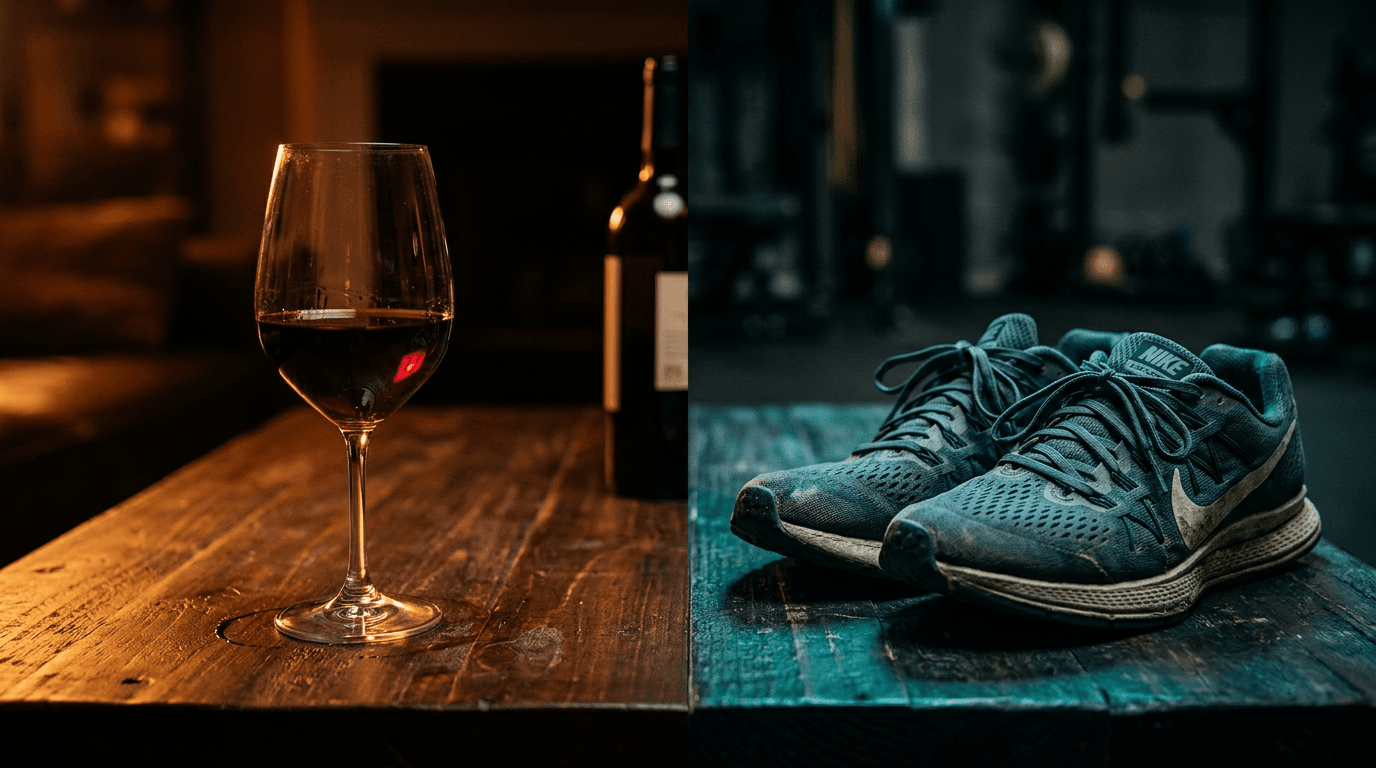
You trained hard this week. Five solid sessions, progressive overload, good nutrition. Then Friday arrives, and you have a few drinks with friends. Saturday morning, your recovery score is in the red. Your HRV has dropped by 30%. Your resting heart rate is up by eight beats per minute.
You already knew alcohol was not great for you. But seeing the data puts a number on it, and that number is often worse than people expect.
This is not an article about why you should never drink. It is an article about what alcohol actually does to your body's recovery processes, so you can make informed decisions rather than guessing.
How Alcohol Affects HRV
Heart rate variability is one of the most sensitive markers of autonomic nervous system function. It reflects the balance between your sympathetic (fight or flight) and parasympathetic (rest and digest) nervous systems. Higher HRV generally indicates better recovery and readiness. Lower HRV suggests your body is under stress.
Alcohol disrupts this balance directly and measurably.
The Parasympathetic Suppression
When you drink, alcohol suppresses your parasympathetic nervous system, the branch responsible for rest, recovery, and repair. At the same time, it elevates sympathetic activity. The result is a double hit: your body loses its ability to shift into recovery mode while simultaneously remaining in a low-grade stress state.
This shows up clearly in HRV data. Research published in the journal Alcoholism: Clinical and Experimental Research has consistently shown that even moderate alcohol consumption (two to three standard drinks) significantly reduces overnight HRV compared to alcohol-free nights.
The effect is dose-dependent. The more you drink, the more pronounced the suppression. But the important point is that it starts at relatively low doses. You do not need to get drunk to see the effect. Two glasses of wine with dinner will often produce a noticeable dip in your overnight HRV.
Elevated Resting Heart Rate for 24-72 Hours
Alongside the HRV suppression, alcohol elevates your resting heart rate. This is partly due to the direct sympathetic activation and partly due to the metabolic demands of processing alcohol through your liver.
The timeline matters. Your resting heart rate does not just spike on the night you drink and return to normal the next morning. Depending on the amount consumed, it can remain elevated for 24 to 72 hours. Heavy drinking sessions can push your resting heart rate up by 5-15 beats per minute, and this elevation persists well into the next day or even the day after that.
This is why many people who track their recovery notice that a Friday night of drinking affects not just Saturday's recovery score but Sunday's as well. The effects linger longer than most people assume.
What the Wearable Data Shows
If you wear a recovery tracker like Penng and occasionally drink, you have probably noticed this pattern yourself. The morning after drinking, your recovery score drops into the yellow or red zone. Your HRV is below your baseline. Your resting heart rate is elevated. And even if you slept for eight hours, your sleep score is poor.
This is not the device being overly sensitive. It is accurately reflecting the physiological reality: your body is under stress and its recovery capacity is compromised.
How Alcohol Disrupts Sleep
Ask most people how they slept after a few drinks, and they will tell you they fell asleep quickly and slept through the night. The data tells a different story.
The Sedation Illusion
Alcohol is a sedative. It does help you fall asleep faster. But sedation is not the same as sleep. The quality of the sleep you get after drinking is fundamentally different from normal, restorative sleep.
Alcohol-induced sleep tends to be shallower, more fragmented, and architecturally disrupted. You may not remember waking up during the night, but your wearable will often show increased restlessness and more frequent micro-awakenings.
Deep Sleep Reduction
Deep sleep (slow-wave sleep) is the most physically restorative stage of sleep. It is when growth hormone is released, when muscle repair occurs at the highest rate, and when your immune system does its most important work.
Alcohol reduces time spent in deep sleep. Studies have shown reductions of 15-40% in slow-wave sleep after moderate to heavy alcohol consumption. This is significant. If you normally get 90 minutes of deep sleep and alcohol cuts that to 55 minutes, your body has substantially less time for the physical repair processes that underpin recovery.
For anyone interested in improving deep sleep, eliminating or reducing alcohol consumption is one of the most impactful changes you can make.
REM Sleep Fragmentation
REM (rapid eye movement) sleep is critical for cognitive function, memory consolidation, and emotional regulation. Alcohol fragments REM sleep, particularly in the second half of the night.
Here is what typically happens: alcohol metabolises at roughly one standard drink per hour. In the first half of the night, while alcohol levels are high, you experience more deep sleep than usual (though of lower quality). As alcohol is metabolised and levels drop in the second half of the night, you experience a rebound effect. Your sleep becomes lighter, REM sleep is disrupted, and you are more likely to wake up.
This is why many people who drink report waking up at three or four in the morning and struggling to fall back asleep. The alcohol has been metabolised, and the resulting neurochemical rebound disrupts the latter portion of the sleep cycle.
The Cumulative Sleep Debt
One night of alcohol-disrupted sleep is manageable. Your body can compensate. But if you drink multiple times per week, the cumulative effect on sleep quality becomes substantial. Chronic sleep disruption from regular drinking creates a sleep debt that is difficult to repay, and it shows up in progressively declining recovery metrics over time.
Impact on Muscle Protein Synthesis
For anyone training to build muscle or maintain it, alcohol's effect on muscle protein synthesis (MPS) is directly relevant.
The Research
A widely cited study from RMIT University found that alcohol consumption after resistance training significantly reduced muscle protein synthesis, even when adequate protein was consumed alongside it. Specifically, consuming alcohol after training reduced MPS by approximately 24% when combined with protein ingestion and by 37% when consumed with carbohydrate only.
This matters because MPS is the fundamental process through which your muscles repair and grow after training. If alcohol is suppressing this process by a quarter to a third, you are getting less return on your training investment.
Hormonal Disruption
Alcohol also affects the hormonal environment that supports recovery and adaptation:
- Testosterone. Acute alcohol consumption reduces testosterone levels. For moderate drinking, the effect is temporary and relatively small. For heavy drinking, the suppression can be significant and last 24-48 hours.
- Cortisol. Alcohol elevates cortisol, the primary stress hormone. Elevated cortisol promotes muscle breakdown and inhibits recovery.
- Growth hormone. Because alcohol disrupts deep sleep, it indirectly suppresses growth hormone release, which occurs primarily during slow-wave sleep.
The combined effect is an environment that is less favourable for muscle repair, adaptation, and growth.
Dehydration and Performance
Alcohol is a diuretic. It inhibits the release of antidiuretic hormone (ADH), causing your kidneys to excrete more water than normal. This leads to dehydration, which has cascading effects on recovery and performance.
Dehydration affects:
- Nutrient delivery. Blood volume decreases, reducing the efficiency of nutrient transport to recovering muscles.
- Thermoregulation. Your ability to regulate body temperature during exercise is impaired.
- Cognitive function. Even mild dehydration (1-2% of body weight) impairs concentration, reaction time, and decision-making.
- Heart rate. Dehydration elevates heart rate independently of alcohol's direct effects, compounding the resting heart rate elevation already caused by the alcohol itself.
If you train the morning after drinking, you are starting in a dehydrated state. Even if you drink water before bed, alcohol-induced diuresis means your hydration levels are lower than they would otherwise be.
Dose-Response: One to Two Drinks Versus Heavy Drinking
Not all drinking is equal. The magnitude of the effects described above depends heavily on how much you consume.
Light Drinking (One to Two Standard Drinks)
One to two drinks produces measurable but modest effects:
- HRV dips by approximately 5-15% below baseline.
- Resting heart rate may increase by 2-5 beats per minute.
- Sleep quality is slightly reduced, mainly in the second half of the night.
- Muscle protein synthesis is modestly affected.
- Effects typically resolve within 24 hours.
For most people, this level of occasional drinking does not meaningfully derail a training programme. The key word is occasional. If "one to two drinks" happens four or five times per week, the cumulative effect becomes significant.
Moderate to Heavy Drinking (Three to Six Standard Drinks)
This is where the effects become pronounced:
- HRV can drop by 20-40% below baseline.
- Resting heart rate often increases by 5-15 beats per minute.
- Deep sleep is substantially reduced (20-40% less slow-wave sleep).
- REM sleep fragmentation is significant.
- Muscle protein synthesis is suppressed by 20-37%.
- Effects can persist for 48-72 hours.
- Recovery scores will likely show red for one to two days.
This level of drinking effectively costs you two to three days of optimal recovery. If you are training on a structured programme, that is a meaningful setback.
Binge Drinking (Six or More Standard Drinks)
At this level, the effects are severe and can take three to five days to fully resolve. HRV may be suppressed for the better part of a week. Sleep disruption extends across multiple nights. The hormonal environment is significantly unfavourable for recovery. For anyone serious about their training, this level of consumption is incompatible with their goals.
Timing Matters
When you drink relative to your training session affects the magnitude of the impact.
Drinking After Training
This is the most common scenario and unfortunately one of the worst in terms of recovery. The post-exercise window is when your body initiates the repair and adaptation processes. Introducing alcohol during this window directly competes with recovery. The RMIT study mentioned earlier specifically examined post-exercise alcohol consumption and found significant MPS suppression.
If you are going to drink, doing so after training is the worst timing for recovery purposes.
Drinking the Night Before Training
Training after a night of drinking means training in a state of compromised recovery, dehydration, and elevated sympathetic nervous system activity. Your performance will almost certainly be worse, and the training stimulus you generate will be less effective because your body is still dealing with the metabolic burden of the alcohol.
Drinking on Rest Days
If you are going to drink, rest days are the least disruptive option. You are not trying to recover from a training session, and the next day's training is at least 24 hours away, giving your body more time to process the alcohol before you place additional demands on it.
This is not permission to drink heavily on rest days. The sleep disruption and HRV suppression still occur. But the overall impact on your training programme is minimised compared to drinking immediately before or after sessions.
Practical Guidelines for Athletes and Active People
Complete abstinence is the optimal choice for recovery. That is the honest, evidence-based answer. But most people are not looking for the theoretically optimal choice. They are looking for a practical framework that balances their social life with their training goals.
Here are evidence-informed guidelines:
Know your priorities. If you are in a competition prep, a focused training block, or recovering from injury, abstaining entirely is the smart choice. These are periods where every percentage point of recovery matters.
Limit frequency. One to two occasions per week with light drinking is the upper end of what most serious recreational athletes can absorb without meaningful impact on their training.
Limit quantity. Keep it to one to two standard drinks per occasion when possible. The dose-response curve is steep; the difference between two drinks and four drinks is not linear in its effects.
Avoid post-training alcohol. If you trained that day, skip the drinks. Your body is in active recovery mode and alcohol directly undermines that process.
Hydrate aggressively. If you do drink, match each alcoholic drink with a glass of water. Drink an additional 500 ml of water before bed. This does not eliminate the effects but reduces the dehydration component.
Eat before and during. Food slows alcohol absorption, which modestly reduces the peak blood alcohol level and its acute effects.
Check your data the next morning. Use your recovery score as feedback. If your HRV is suppressed and recovery is red, adjust your training accordingly. A lighter session or active recovery day is a better choice than grinding through a planned hard session on compromised recovery.
Do not use the sauna or hot tub. Alcohol impairs thermoregulation. Combining it with heat exposure is potentially dangerous and should be avoided.
The Bottom Line
Alcohol is not a mystery in terms of its effects on recovery. The science is clear and the data from your wearable confirms it in real time. Even moderate drinking suppresses HRV, elevates resting heart rate, disrupts sleep architecture, and impairs muscle protein synthesis. These are not theoretical concerns. They are measurable, dose-dependent realities that show up in your morning recovery data.
The goal is not to be moralistic about it. The goal is to be informed. When you understand exactly what two drinks does to your overnight HRV, your deep sleep, and your next-day recovery score, you can make a conscious choice about whether the trade-off is worth it on any given night.
For many people, seeing the data is more persuasive than any lecture. Track your recovery on nights you drink and nights you do not. The numbers will tell the story more effectively than anything else.
Frequently Asked Questions
How long does alcohol affect HRV?
The duration depends on the amount consumed. Light drinking (one to two drinks) typically suppresses HRV for 12-24 hours. Moderate drinking (three to five drinks) can affect HRV for 24-48 hours. Heavy drinking may suppress HRV for 48-72 hours or longer. The effects show up most clearly in overnight HRV measurements, which is why your morning recovery score after drinking is often noticeably lower than your baseline.
Is one beer after a workout really that bad?
One standard beer after a workout is not catastrophic, but it is not ideal. Research shows that even small amounts of alcohol after exercise can modestly suppress muscle protein synthesis and compromise the recovery window. If it is a rare occurrence, the impact on your overall progress is minimal. If it becomes a regular post-workout habit, the cumulative effect on recovery and adaptation is worth considering. Ideally, separate your drinking from your training by at least several hours.
Does alcohol completely cancel out a workout?
No. Alcohol does not erase the training stimulus entirely. Your muscles still experienced mechanical tension, metabolic stress, and muscle damage. The adaptations are not cancelled. However, the magnitude of the adaptation is reduced because alcohol impairs the recovery processes that translate training stimulus into actual fitness gains. Think of it as getting 70-80% of the benefit rather than zero.
Can you improve your alcohol tolerance to reduce its effects on recovery?
Tolerance to the subjective effects of alcohol (feeling less drunk) does not reduce its physiological effects on recovery. Your liver may process alcohol more efficiently with habitual drinking, but the impact on HRV, sleep architecture, and muscle protein synthesis remains. In fact, higher tolerance often means people drink more, which worsens the recovery impact. Tolerance is not a protective factor for recovery metrics.
Should I skip training the day after drinking?
It depends on how much you drank and how you feel. After light drinking (one to two drinks), you can likely train normally, though your performance may be slightly below par. After moderate to heavy drinking, consider adjusting your session. A lighter workout, reduced intensity, or active recovery session is more productive than forcing a hard session on compromised recovery. Check your recovery data: if your wearable shows red, respect it and dial back the intensity.
Wondering where your recovery stands? Take the free quiz at penng.ai/quiz and find out in 2 minutes.