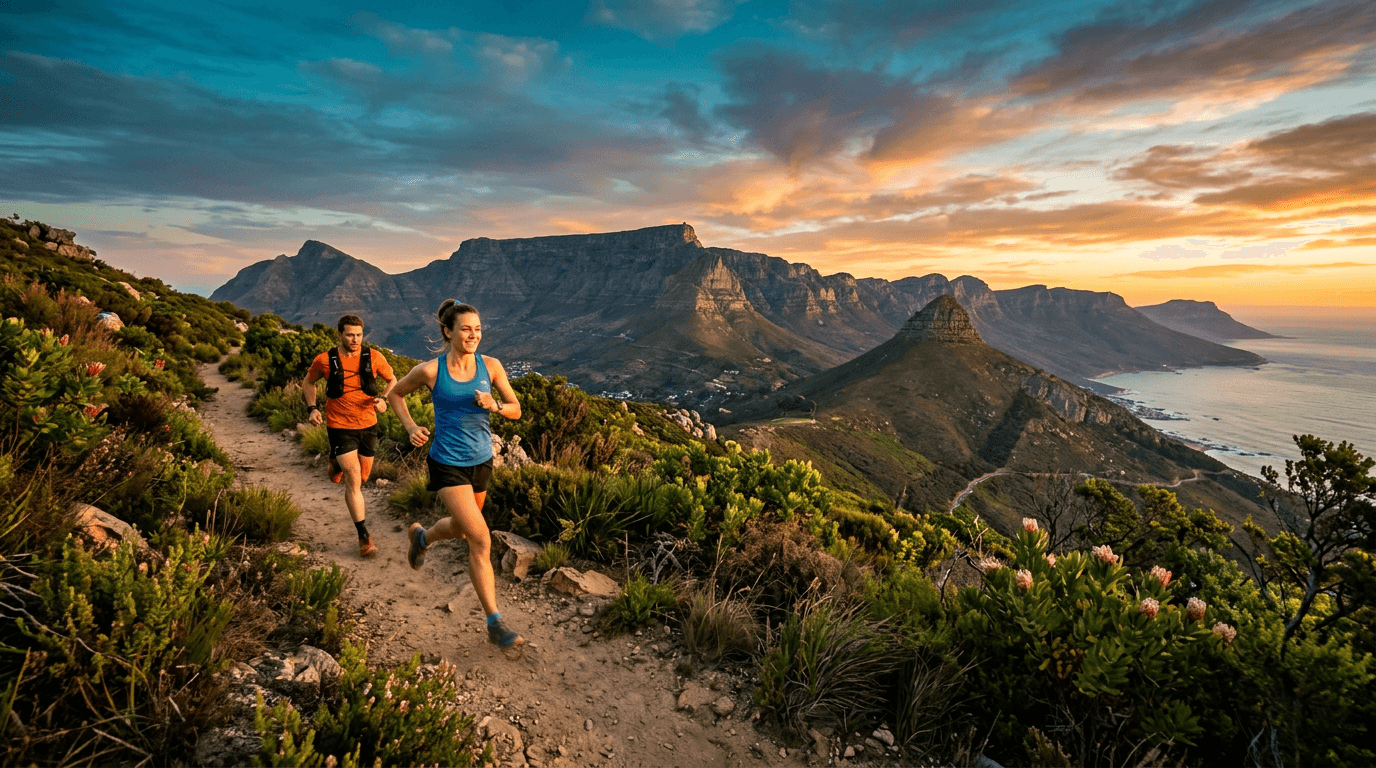
South Africa has some of the best outdoor training terrain on the planet. From the granite peaks of Table Mountain to the sandstone cliffs of the Drakensberg, from the subtropical coastline of KwaZulu-Natal to the bushveld trails of Mpumalanga, the country offers a diversity of outdoor fitness environments that most nations can only envy.
And South Africans use them. Running culture, hiking culture, cycling culture, and outdoor functional fitness are all deeply embedded in how people train here. This isn't a country where you need to convince people to exercise outdoors. You just need to help them do it smarter.
This guide covers the best outdoor training activities in South Africa, how to track them effectively, safety considerations you can't ignore, and how recovery data helps you get more from your outdoor training.
Why South Africa Is Built for Outdoor Training
Climate
South Africa's climate is broadly favourable for outdoor exercise for most of the year. The Western Cape offers a Mediterranean climate with dry, warm summers and mild winters. Gauteng has warm summers with afternoon thunderstorms and cool, dry winters perfect for outdoor training. KZN's subtropical climate requires heat management in summer but is pleasant year-round.
Compare this to countries where outdoor training is limited to 4-6 months of the year due to snow, ice, or extreme cold. South Africans can train outdoors virtually every month, adjusting for regional weather patterns rather than hibernating indoors for half the year.
Terrain Diversity
Within a few hours' drive, you can find:
- Rocky mountain trails (Table Mountain, Drakensberg, Cederberg)
- Coastal running routes (Sea Point promenade, Durban beachfront, Garden Route)
- Forest trails (Knysna, Tsitsikamma, Magoebaskloof)
- Flat road routes (Gauteng highways, Free State open roads)
- Sand dunes and beaches (Wild Coast, West Coast)
- Desert terrain (Karoo, Northern Cape)
This diversity means outdoor training never gets monotonous. The variety of terrain challenges different muscle groups, energy systems, and technical skills.
Outdoor Fitness Community
South Africa's outdoor fitness community is vibrant and growing. Running clubs, hiking groups, cycling clubs, and outdoor functional fitness groups operate in every major city and many smaller towns. The community aspect is strong: people train together for safety, motivation, and social connection.
Best Outdoor Activities in South Africa
Trail Running
Trail running is one of the fastest-growing sports in South Africa. The country's terrain is tailor-made for it, and the events calendar is packed.
Where to run:
- Western Cape: Table Mountain, Lion's Head, Silvermine, Helderberg trails, Jonkershoek
- KwaZulu-Natal: Drakensberg trails, Karkloof, Midlands
- Gauteng: Cradle of Humankind, Suikerbosrand, Magaliesberg
- Eastern Cape: Tsitsikamma, Addo trails
- Mpumalanga: Lowveld trails, Blyde River Canyon
Key events: Ultra-trail Cape Town (UTCT), SkyRun, Otter African Trail Run, Cathedral Peak Challenge, Hout Bay Trail Challenge.
Tracking needs: GPS for distance and route, heart rate for intensity, elevation data for climb analysis, and recovery tracking for managing training load across a week of mixed terrain sessions. Trail running accumulates strain faster than road running due to the technical demands and elevation changes.
Hiking
Hiking in South Africa ranges from gentle coastal walks to multi-day mountain traverses. It's one of the most accessible outdoor activities because you don't need special equipment beyond decent footwear.
Top hiking destinations:
- Table Mountain and surrounds: Dozens of routes from beginner (Pipe Track) to advanced (India Venster, Platteklip Gorge)
- Drakensberg: Multi-day hikes including Cathedral Peak, Amphitheatre, Giant's Cup Trail
- Tsitsikamma: The Otter Trail (5-day, considered South Africa's most iconic multi-day hike)
- Cederberg: Wolfberg Arch, Maltese Cross, Sneeuberg
- Magaliesberg: Accessible from Johannesburg and Pretoria
Tracking needs: Heart rate monitoring tells you the actual cardiovascular cost of a hike (which varies enormously with gradient and pack weight). Strain tracking helps you understand how a 6-hour hike affects your body compared to a gym session. Many hikers underestimate how much a long hike depletes their recovery capacity.
Road and Trail Cycling
South Africa's cycling infrastructure varies, but the riding opportunities are exceptional. The Western Cape in particular offers world-class road cycling routes.
Popular routes and events:
- Cape Town Cycle Tour: The world's largest individually timed cycle race (109km)
- 94.7 Ride Joburg: Gauteng's premier road cycling event
- Route 62/Garden Route: Scenic road cycling through the Western Cape interior
- Jonkershoek/Helderberg: Trail riding through nature reserves
- Tokai/Constantia: MTB trails on the Cape Peninsula
Tracking needs: GPS and speed data are essential for cyclists. Heart rate and power (if you have a power meter) help quantify the session's intensity. Recovery tracking is particularly important for cyclists who ride multiple days per week, as cycling accumulates significant cardiovascular strain even when it doesn't feel as demanding as running.
Open Water Swimming
South Africa's coastline and inland dams offer open water swimming opportunities, though conditions vary significantly.
Popular locations:
- Clifton and Camps Bay (Cape Town): Cold Atlantic water, sheltered bays
- Durban beachfront: Warmer Indian Ocean, surf conditions
- Midmar Dam (KZN): Home to the Midmar Mile, one of the world's largest open water swims
- Various dams and lakes: Throughout Gauteng, Mpumalanga, and KZN
Important note on tracking: If you're swimming, you need a water-resistant tracker. This is a category where devices like Garmin (5 ATM+), Apple Watch (WR50), and WHOOP (IP68) are appropriate. Penng, rated at 1 ATM, is not suitable for swimming. This is an honest limitation. If open water swimming is a significant part of your training, you need a device built for water immersion.
Surfing
South Africa has world-class surf with reliable breaks along both the Atlantic and Indian Ocean coasts.
Key surf locations:
- Jeffreys Bay: One of the world's best right-hand point breaks
- Muizenberg: Cape Town's beginner-friendly surf beach
- Durban: Consistent warm-water waves
- Elands Bay: West Coast break, cold water
- Coffee Bay/Wild Coast: Remote, powerful surf
Tracking needs: Similar to swimming, you need a waterproof device. GPS-enabled watches can track wave count and distance paddled. Heart rate data shows the significant cardiovascular demand of paddling. Recovery tracking helps manage the physical toll of multi-session surf days. Again, Penng's 1 ATM rating means it isn't suitable for surfing.
Mountain Biking
South Africa has one of the strongest mountain biking cultures on the continent, with dedicated trail networks, events, and a growing bikepacking scene.
Popular areas:
- Tokai/Constantia forests (Cape Town): Well-maintained singletrack
- Jonkershoek (Stellenbosch): Technical trails through pine and fynbos
- Karkloof (KZN): Lush subtropical trails
- Cradle of Humankind (Gauteng): Rocky bushveld riding
- Garden Route Trail Park: Coastal forest riding
Events: Cape Epic (8-day stage race), Wines2Whales, JoBerg2c.
Tracking needs: GPS and heart rate are essential. Mountain biking generates significant upper body strain from vibration and steering that doesn't show up in heart rate alone. Recovery tracking helps manage the cumulative fatigue from a week that includes both riding and cross-training.
Outdoor Functional Fitness
CrossFit-style outdoor workouts, boot camps on the beach, and park-based functional training are increasingly popular, particularly in Cape Town and Durban.
Popular formats:
- Beach boot camps (Sea Point, Camps Bay, Durban beachfront)
- Park workouts using benches, stairs, and bodyweight
- Outdoor CrossFit (some boxes do WODs outdoors when weather permits)
- Calisthenics communities using outdoor pull-up bars and parallel bars
Tracking needs: Heart rate and strain data are the most relevant. GPS is unnecessary. Recovery tracking is important because outdoor functional fitness is high-intensity by nature and depletes recovery capacity quickly.
How to Track Outdoor Training Effectively
Different outdoor activities have different tracking requirements. Here's a practical framework:
For activities that need GPS (running, cycling, hiking)
You need a device with built-in GPS or the ability to use phone GPS. Garmin watches are the gold standard here. On-device GPS means you don't need to carry your phone, and the accuracy is better.
Penng can use phone GPS for some workout types but doesn't have built-in GPS. For serious outdoor athletes who need route data, this is a limitation worth knowing.
For activities in water (swimming, surfing)
You need a device rated 5 ATM or higher. Garmin, Apple Watch, Samsung Galaxy Watch, and WHOOP all handle water. Penng (1 ATM) does not.
For recovery across all activities
This is where a recovery-focused tracker adds value regardless of the activity type. Whether you ran trails, hiked Table Mountain, or did a beach boot camp, your recovery score the next morning tells you how your body handled it and whether you're ready for tomorrow's session.
Penng's recovery score (0-100% with green/yellow/red colour coding) synthesises overnight HRV, resting heart rate, sleep quality, and SpO2 into a single number. It doesn't care whether yesterday's strain came from cycling or hiking. It tells you the net result: how recovered are you today?
For detailed analysis of recovery-focused trackers, see our best recovery tracker for 2026 comparison.
For nutrition around outdoor training
Long outdoor sessions (multi-hour hikes, long runs, century rides) demand proper fuelling. Under-eating before or during these sessions leads to bonking, poor performance, and extended recovery times. Over-eating post-session can undermine body composition goals.
Penng's AI food tracking helps manage nutrition around outdoor training. Photograph your pre-hike breakfast, your on-trail snacks, and your post-ride recovery meal. The app tracks calories, protein, carbs, fat, and gives each entry a health score. Having nutrition data alongside strain and recovery data creates a complete picture of how outdoor training affects your body.
Safety Considerations for Outdoor Training in South Africa
This section matters. South Africa's outdoor environment is beautiful but not without risks.
Personal Safety
Crime is a reality that affects outdoor training decisions in South Africa. Practical guidelines:
- Train in groups. Running clubs, cycling groups, and hiking clubs exist in every major city. There's safety in numbers.
- Choose your location. Nature reserves, gated estates, established trail parks, and busy public routes are safer than isolated areas.
- Time your sessions. Early morning is generally safer for outdoor training. Avoid training alone in the dark, particularly on roads or paths without other people.
- Vary your routes. Predictable patterns make you a target. Mix up your training locations and times.
- Leave valuables behind. Don't carry expensive phones or cash. A basic wrist tracker that doesn't look expensive draws less attention than a flashy smartwatch.
- Tell someone. Share your route and expected return time with a friend or family member.
- Use tracking apps. Strava's Beacon feature, WhatsApp live location sharing, or dedicated safety apps let others monitor your location in real time.
Environmental Hazards
- Sun exposure. South African UV levels are high. Sunscreen, hats, and UV-protective clothing are non-negotiable for daytime outdoor training.
- Dehydration. Summer temperatures regularly exceed 30 degrees Celsius in most regions. Carry water on any session longer than 30 minutes.
- Wildlife. Trail runners and hikers may encounter snakes (puff adders, Cape cobras, boomslangs). Stay on marked trails, watch where you step, and know basic snakebite first aid.
- Terrain. Technical trails require appropriate footwear. Ankle injuries are the most common trail running and hiking injury.
- Weather changes. Mountain weather changes rapidly, especially on Table Mountain and in the Drakensberg. What starts as a clear morning can become a cold, foggy afternoon. Layer appropriately and check forecasts.
Seasonal Considerations
Summer (November-March):
- Train early (before 8am) or late (after 4pm) to avoid peak heat
- Hydration is critical
- Afternoon thunderstorms in Gauteng and KZN can be violent. Be off exposed ridges by early afternoon
- UV exposure is extreme. Protect your skin
Winter (May-August):
- Western Cape: rain, cold fronts. Waterproof layers for trail running and hiking
- Gauteng: dry, cold mornings warming to pleasant afternoons. Ideal for outdoor training
- KZN: mild, dry. Excellent conditions
- Shorter daylight hours mean less time for evening sessions
Shoulder seasons (April, September-October):
- Generally the best months for outdoor training across most of the country
- Moderate temperatures, stable weather, good daylight
How Recovery Tracking Helps Manage Outdoor Training Load
Outdoor training is inherently variable. A flat road run is different from a mountain trail run. A leisurely hike is different from a technical scramble. A sheltered cycle is different from a windy coastal ride.
This variability makes it harder to manage training load by feel alone. You might feel fine after a 3-hour hike, only to discover the next morning that your body took a bigger hit than expected. Or you might skip training because "yesterday was hard," not realising your body has actually recovered well.
A recovery score removes the guessing. It tells you the actual physiological state of your body each morning, regardless of how yesterday's training felt subjectively. This is particularly valuable for outdoor athletes who:
- Train multiple activities in a week. Running, cycling, hiking, and gym work all contribute to total strain. A recovery score integrates the cumulative effect.
- Do long sessions. Multi-hour outdoor sessions create significant strain that takes 24-72 hours to fully recover from. Knowing your actual recovery status prevents you from stacking hard sessions too close together.
- Train in varying conditions. Heat, altitude, wind, and terrain all increase the physiological cost of a session beyond what heart rate alone captures. Recovery data captures the net effect.
- Prepare for events. Leading up to a trail race, ultra, or multi-day hike, recovery tracking helps you taper effectively. You can see your recovery trending upward as you reduce training volume.
Penng's 109+ workout types include hiking, running, cycling, walking, trail running, and many more outdoor activities. While workouts must be manually started and ended in the app (no auto-detect), the strain data from these sessions feeds into your daily strain score and influences tomorrow's recovery calculation.
For a deeper understanding of how recovery tracking prevents overtraining, see our guide on signs of overtraining and how to track recovery.
Recommended Tracking Setup by Activity Profile
Primarily trail running or cycling
Primary device: Garmin with built-in GPS (Forerunner 265 or Fenix 8) for route data, pace, and sport-specific metrics. Optional complement: A recovery-focused device (Penng or WHOOP) for deeper recovery and nutrition tracking that Garmin's Body Battery doesn't fully cover.
Primarily hiking and mixed outdoor training
A recovery-focused tracker like Penng covers heart rate, strain, recovery, sleep, and nutrition for R1,950/year. If you don't need GPS route data, the screen-free design and 21-day battery are well-suited for the outdoors. If you need GPS for navigation, pair with your phone's GPS or add a dedicated GPS device.
Primarily swimming or surfing
A water-resistant device is non-negotiable. Garmin, Apple Watch, or Samsung Galaxy Watch for water activities. Penng's 1 ATM rating makes it unsuitable for any in-water training.
Mixed outdoor + gym training
Penng handles both gym and non-water outdoor training well. Recovery, strain, and nutrition data apply equally to a morning trail run and an afternoon weights session. The 21-day battery means you never worry about charging between sessions.
For a full comparison of trackers suited to different fitness profiles, check our best fitness tracker for South Africa guide.
The Bottom Line
South Africa offers some of the world's best outdoor training environments. The climate, terrain diversity, and fitness culture create opportunities that most countries can't match. Whether you're running Table Mountain trails, cycling through the winelands, hiking the Drakensberg, or doing boot camps on the beach, the outdoor fitness potential here is extraordinary.
Tracking outdoor training effectively means matching your device to your primary activities. GPS for runners and cyclists. Water resistance for swimmers. Recovery and strain data for everyone who wants to train sustainably rather than just train hard.
The biggest opportunity for outdoor athletes in South Africa isn't more training. It's smarter training. Understanding your recovery, managing your strain, and fuelling properly turns good outdoor sessions into genuine, sustainable progress.
Frequently Asked Questions
What's the best fitness tracker for trail running in South Africa?
For trail running specifically, Garmin (Forerunner 265 or Fenix 8) is the best choice due to multi-band GPS, on-wrist navigation, and detailed running metrics. If you're less focused on route data and more on recovery and nutrition, Penng offers a complementary perspective at a lower price point. Penng supports running and hiking workout types but doesn't have built-in GPS.
Can I use Penng for outdoor training?
Yes, for most outdoor activities that don't involve water immersion. Penng supports 109+ workout types including hiking, running, cycling, walking, and various outdoor activities. It tracks heart rate, strain, and contributes to your daily recovery picture. However, it's rated at 1 ATM (splash-proof only) and is not suitable for swimming, surfing, or showering. It also doesn't have built-in GPS, so phone GPS is used where available.
Is it safe to exercise outdoors in South Africa?
South Africa's outdoor training environment requires common-sense precautions. Train in groups when possible, choose established routes and nature reserves, train during daylight hours, vary your routes, and share your location with someone. Running clubs, cycling groups, and hiking clubs provide safety in numbers and are active in every major city. Most outdoor training areas are safe with appropriate awareness and planning.
How do I manage training load across different outdoor activities?
A recovery-based tracking approach works well for multi-activity athletes. Rather than trying to quantify each activity separately, a daily recovery score tells you the net result of all your training and life stress. When your recovery is green, push hard regardless of the activity. When it's red, back off. This framework handles the variability of outdoor training better than fixed-schedule programmes.
What outdoor training activities are most popular in South Africa?
Trail running and road running lead, driven by events like Comrades, Two Oceans, and UTCT. parkrun brings hundreds of thousands to outdoor 5km events weekly. Hiking is popular across all fitness levels, particularly in the Western Cape and KZN. Road and mountain cycling have strong communities. Open water swimming, surfing, and beach boot camps are popular in coastal cities. The diversity of activities mirrors the diversity of South Africa's terrain.
Want to see how your outdoor training affects your recovery? Take the free quiz at penng.ai/quiz to understand what your body data means for your training goals.