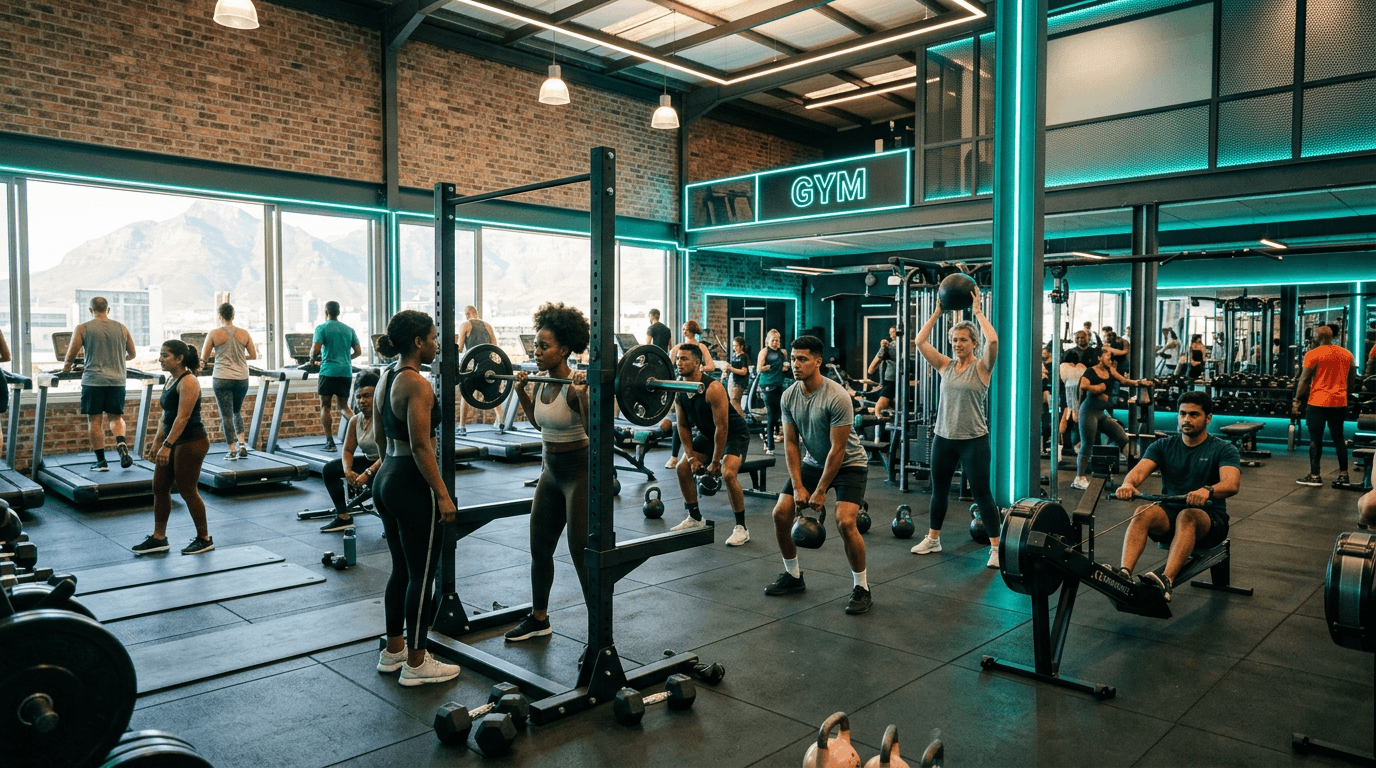
South Africa's fitness industry has a unique character. It's shaped by economic reality, cultural diversity, climate, infrastructure challenges, and a remarkably passionate running community. It doesn't look like the American fitness industry, and it shouldn't try to.
This is a snapshot of where South African fitness stands in 2026: what's growing, what's declining, what's uniquely South African, and where the opportunities are.
The Gym Landscape
Big Box Gyms
Virgin Active and Planet Fitness remain the dominant gym chains in South Africa. Virgin Active operates over 100 clubs nationally and has positioned itself as the premium option, with monthly memberships ranging from approximately R500 to R1,200 depending on the tier and location.
Planet Fitness targets the more value-conscious market with memberships starting around R200-R400/month. Their model focuses on accessibility and volume: more locations, lower prices, fewer frills.
Both chains recovered from the COVID lockdowns, but membership numbers haven't fully returned to 2019 levels. The pandemic permanently changed some people's relationship with gyms. Many discovered home workouts, outdoor training, or simply decided the monthly expense wasn't justified.
Boutique Fitness
Boutique studios have been the growth story of the past few years. CrossFit boxes, F45 studios, yoga studios, Pilates reformer studios, and cycling studios (like Ride Republic) have expanded in major metro areas.
The appeal is community. A CrossFit box or an F45 studio offers structured workouts, coaching, and a group of people who know your name. It's a different experience from walking into a big commercial gym and navigating a floor of machines alone.
The price point is higher, typically R800-R2,000/month, but the retention rates are stronger. People who join boutique studios tend to stick around longer because of the social component.
Budget and Low-Cost Options
On the other end, budget gyms are growing. Brands offering basic equipment access for R99-R199/month are appearing in shopping centres and industrial areas. These serve a market that wants gym access without paying Virgin Active prices.
The trade-off is obvious: fewer amenities, less equipment variety, minimal staff. But for someone who just needs a squat rack and a bench, it's enough.
Home Gyms
The home gym trend that accelerated during COVID has stabilised. People who invested in equipment during lockdown are still using it. New home gym purchases have slowed as people return to commercial gyms or outdoor training.
The challenge in South Africa is space. Many homes and apartments don't have a dedicated room for gym equipment. Those who do tend to be in suburban areas with garages or extra rooms. Urban apartment dwellers are less likely to have home gym setups.
Running Culture: South Africa's Fitness Identity
Running is woven into South African culture in a way that's difficult to overstate. The Comrades Marathon, Two Oceans Ultra Marathon, and dozens of smaller ultras, trail runs, and road races create a running ecosystem that rivals any country in the world.
Comrades and Two Oceans
The Comrades Marathon (~90km between Durban and Pietermaritzburg) attracts approximately 20,000 runners annually and has a cultural significance that goes far beyond sport. Earning a Comrades medal is a life goal for thousands of South Africans. The race has been run since 1921 and remains one of the most iconic ultramarathons globally.
The Two Oceans Marathon (56km through Cape Town's mountains) draws similar devotion. Both races fill their entries within hours or minutes of registration opening.
parkrun
parkrun has been enormously successful in South Africa. Free, weekly, 5km timed runs held every Saturday morning in parks and public spaces across the country. South Africa is one of the top parkrun countries globally by participation.
parkrun's genius is accessibility. No entry fee. No registration deadline. No minimum fitness level. You just show up and walk, jog, or run 5km. It's become a gateway into running for tens of thousands of South Africans who would never have entered a formal race.
Trail Running
Trail running is booming, particularly in the Western Cape and KwaZulu-Natal. South Africa's diverse terrain, from Table Mountain's technical trails to the Drakensberg's mountain paths to the Garden Route's coastal routes, makes it one of the best trail running destinations in the world.
Events like the Ultra-trail Cape Town (UTCT), SkyRun, and Otter African Trail Run attract international participants. Local trail series are growing in every province.
The Tracking Connection
South Africa's running culture drives wearable adoption. Runners need GPS watches. They track pace, distance, elevation, heart rate, and VO2 max. Garmin dominates this segment because runners need on-wrist GPS data during their runs.
But many runners are also starting to recognise that training data is only half the picture. Recovery data tells you whether your body is ready for tomorrow's run. Nutrition data tells you whether you're fuelling adequately for the training volume. The shift from tracking activity to tracking health is happening, slowly, within the running community.
Wearable Adoption in South Africa
The Current State
Wearable adoption in South Africa lags behind the US and Europe but is growing steadily. The primary barriers are:
Price. Most popular wearables are priced in USD and imported, making them expensive relative to South African incomes. An Apple Watch that costs $400 in the US costs R8,000+ in South Africa.
Perceived necessity. Many South Africans still view fitness trackers as luxury gadgets rather than health tools. The perceived value is low compared to more immediate financial priorities.
Digital infrastructure. While smartphone penetration is high in urban areas, consistent Bluetooth connectivity, app ecosystems, and digital health literacy aren't universal.
What's Driving Growth
Several factors are pushing wearable adoption upward:
Medical aid integration. Discovery Vitality's Apple Watch deal and wearable rewards have normalised fitness tracking among medical aid members. When your medical aid subsidises a wearable, the barrier drops significantly. Read more about this in our guide to Vitality and wearable rewards.
Fitness culture. South Africa's strong running and gym culture creates demand for tracking tools. Serious runners want GPS watches. Gym-goers want recovery data.
Health consciousness. Post-COVID awareness of personal health, combined with South Africa's high rates of lifestyle diseases (diabetes, hypertension, obesity), is making people more interested in monitoring their health proactively.
Local options. Products like Penng, priced in ZAR with local support, remove the import barrier that has historically made wearables inaccessible to many South Africans.
Popular Brands in SA (2026)
By estimated market share for fitness wearables in South Africa:
- Apple Watch - Driven by the Vitality deal and Apple's brand strength
- Samsung Galaxy Watch - Strong among Android users, local availability
- Garmin - Dominant among runners and outdoor athletes
- Fitbit - Still present but losing share post-Google acquisition
- Xiaomi/Amazfit - Growing in the budget segment
- Penng - Growing as the only SA-built health tracking wearable
- WHOOP - Niche, imported, expensive, but known among serious athletes
Economic Factors
Gym Affordability
South Africa's economic reality shapes fitness decisions. With household debt high and disposable income under pressure, gym memberships compete with groceries, fuel, and school fees for monthly budget allocation.
This creates a bifurcation: premium gyms serving the upper-middle class and budget gyms serving everyone else. The middle market (R400-R700/month) is squeezed.
Fitness tracker purchases face similar pressure. A R8,000 Apple Watch is a significant investment for most South African households. A R1,950/year subscription or a R3,500 once-off purchase is more accessible but still discretionary.
The Subscription Mindset
South Africans are increasingly comfortable with subscription models thanks to services like DStv (Multichoice), Showmax, Spotify, and cellular contracts. The idea of paying monthly or annually for a service isn't foreign.
However, subscription fatigue is real. People carefully evaluate which subscriptions deliver enough value to keep. A fitness tracker subscription needs to justify itself not just in data quality but in tangible lifestyle impact.
Load Shedding's Impact on Fitness
Load shedding (planned power outages) has been a defining feature of South African life over the past several years. While the situation has improved by 2026, the impact on fitness infrastructure lingers:
- Gyms without generators shut down during outages, disrupting training schedules
- Evening training sessions become impossible during winter load shedding slots
- Home gym equipment that requires power (treadmills, rowing machines) becomes unusable
- Gym chains invested in generators and solar, increasing costs passed to members
Load shedding pushed many South Africans toward outdoor training, bodyweight workouts, and equipment-free fitness. This inadvertently strengthened the outdoor fitness culture.
Digital Fitness and Online Coaching
The Rise of Online Coaching
Online personal training and coaching has grown significantly in South Africa. Platforms like FitKey, local independent coaches on Instagram, and international platforms have made programming accessible to people who can't afford R500/hour in-person training.
The quality varies enormously. Some online coaches provide excellent, periodised programming with video form checks and regular adjustments. Others sell generic PDF templates and call it coaching.
For consumers, the challenge is quality assessment. Credentials matter: look for coaches with recognised certifications (HFPA, CSCS, or equivalent) and verifiable client results.
Fitness Apps
South Africans use a mix of global and local fitness apps:
- Strava - Dominant among runners and cyclists. The social network of fitness.
- Nike Run Club - Popular for free running plans
- Stronglifts/JEFIT - Used by gym-goers for programme tracking
- YouTube fitness - Free workout content from international creators
- SA-specific apps - Some local coaches and gyms have their own apps, though adoption is generally low
Wearable-App Ecosystems
The trend toward integrated health ecosystems (wearable + app + coaching) is growing. Rather than just tracking steps, people want their wearable data to inform actionable guidance. "Your recovery is low" is better than "you walked 8,000 steps."
This is where the market is heading: from passive tracking to active guidance. Wearables that just count things are becoming commoditised. Wearables that help you make better decisions are the growth segment.
Unique South African Fitness Challenges
Safety for Outdoor Exercise
Safety is a real constraint on outdoor fitness in South Africa. Running, cycling, and walking outdoors carry risks that simply don't exist in many other countries:
- Runners attacked or mugged during early morning or evening sessions
- Cyclists targeted for bicycle theft
- Limited safe public spaces for outdoor exercise in many areas
- Women facing additional safety concerns for solo outdoor training
This drives several behaviours:
- Group training and running clubs for safety in numbers
- Training at specific times (early morning in summer, avoiding darkness)
- Preference for enclosed estates, nature reserves, or gym-based training
- Treadmill running instead of road running
The fitness tracking implication: outdoor GPS trackers are useful, but many South Africans train indoors or in controlled environments where GPS isn't needed.
Climate Diversity
South Africa's climate varies dramatically by region:
- Western Cape: Mediterranean. Hot, dry summers. Cold, wet winters. Great for outdoor training 8-9 months of the year.
- Gauteng: Subtropical highland. Warm summers with afternoon thunderstorms. Mild winters with cold mornings. Outdoor training year-round with afternoon timing adjustments in summer.
- KwaZulu-Natal: Subtropical. Hot, humid summers. Mild winters. Heat management is the primary concern.
- Eastern Cape/Garden Route: Mild year-round. Variable rainfall.
The diverse climate means outdoor fitness is viable almost everywhere for most of the year, which is an advantage that South Africa has over many Northern Hemisphere countries.
Access Inequality
South Africa has extreme inequality, and fitness access reflects this. World-class gyms and trail running networks exist alongside communities with zero fitness infrastructure. The fitness industry primarily serves the middle and upper classes.
Initiatives like parkrun, community-based fitness programmes, and affordable outdoor training are helping bridge this gap, but the divide remains significant.
Where the Market Is Heading
Prediction 1: Recovery Tracking Goes Mainstream
Recovery scores, currently a niche feature used by serious athletes, will become mainstream over the next 2-3 years. As more consumers realise that knowing when to rest is as important as knowing how much they exercised, demand for recovery data will grow.
Prediction 2: Food Tracking Gets Easier
AI-powered food tracking (photograph your meal, get macro estimates) will replace manual food logging within the next few years. The current generation of manual food logging apps has a 90%+ abandonment rate. AI reduces the friction enough to make consistent tracking viable.
Prediction 3: Local Products Gain Ground
South African consumers are increasingly willing to support local products, especially when they offer genuine value. The import cost barrier for international wearables creates opportunity for locally priced, locally supported alternatives.
Prediction 4: Medical Aid Integration Deepens
Expect medical aids to move beyond simple step counting toward more sophisticated health monitoring. HRV trends, sleep quality, and nutrition data may eventually factor into wellness programme rewards and risk assessment.
Prediction 5: Outdoor Fitness Continues Growing
South Africa's climate, terrain, and growing trail running culture will continue driving outdoor fitness participation. Trail running, hiking, and outdoor functional fitness will outpace traditional gym growth.
For a comprehensive overview of available trackers in the South African market, see our best fitness tracker for South Africa guide.
The Bottom Line
South Africa's fitness industry is shaped by factors that don't apply anywhere else in the world. The combination of a passionate running culture, economic pressure, safety considerations, load shedding history, medical aid integration, and extraordinary outdoor terrain creates a unique market.
For fitness tracking specifically, the market is maturing beyond basic step counting. South African consumers increasingly want data that helps them train smarter, recover properly, and eat well, not just data that proves they moved today.
The products and services that succeed will be the ones that acknowledge South African reality: price sensitivity, local support expectations, diverse training environments, and a population that's increasingly health-conscious but practical about what they can spend.
Frequently Asked Questions
How popular are fitness trackers in South Africa?
Wearable adoption in South Africa is growing but lags behind the US and Europe. The primary barriers are price (most wearables are imported and priced relative to USD), perceived necessity, and competing financial priorities. Discovery Vitality's Apple Watch deal has been a significant driver of adoption. The local market is estimated to be growing at 15-20% annually.
What's the most popular gym chain in South Africa?
Virgin Active is the largest premium gym chain with over 100 locations. Planet Fitness is the most accessible by price, with memberships starting around R200-R400/month. Both serve different market segments. Boutique fitness (CrossFit, F45, specialised studios) is the fastest-growing segment.
Is parkrun popular in South Africa?
Very. South Africa is one of the top parkrun countries globally. Free weekly 5km events run at hundreds of locations every Saturday morning. parkrun is often credited with introducing thousands of South Africans to running who wouldn't have entered a formal race.
How does load shedding affect gyms in South Africa?
Gyms without backup power (generators or solar) shut down during load shedding periods. This disrupts training schedules, particularly for evening sessions. Most major gym chains have invested in generators, but costs are passed to members. Load shedding has pushed some South Africans toward outdoor and bodyweight training that doesn't depend on electricity.
Are there any South African-made fitness trackers?
Penng is a health tracking wearable designed and supported from Cape Town, South Africa. It offers recovery, strain, sleep, and AI food tracking at R1,950/year with local support and ZAR pricing. It's currently the only recovery-focused wearable built specifically for the South African market.
Curious about how your training stacks up? Take the free quiz at penng.ai/quiz to see whether your recovery and nutrition support your fitness goals.