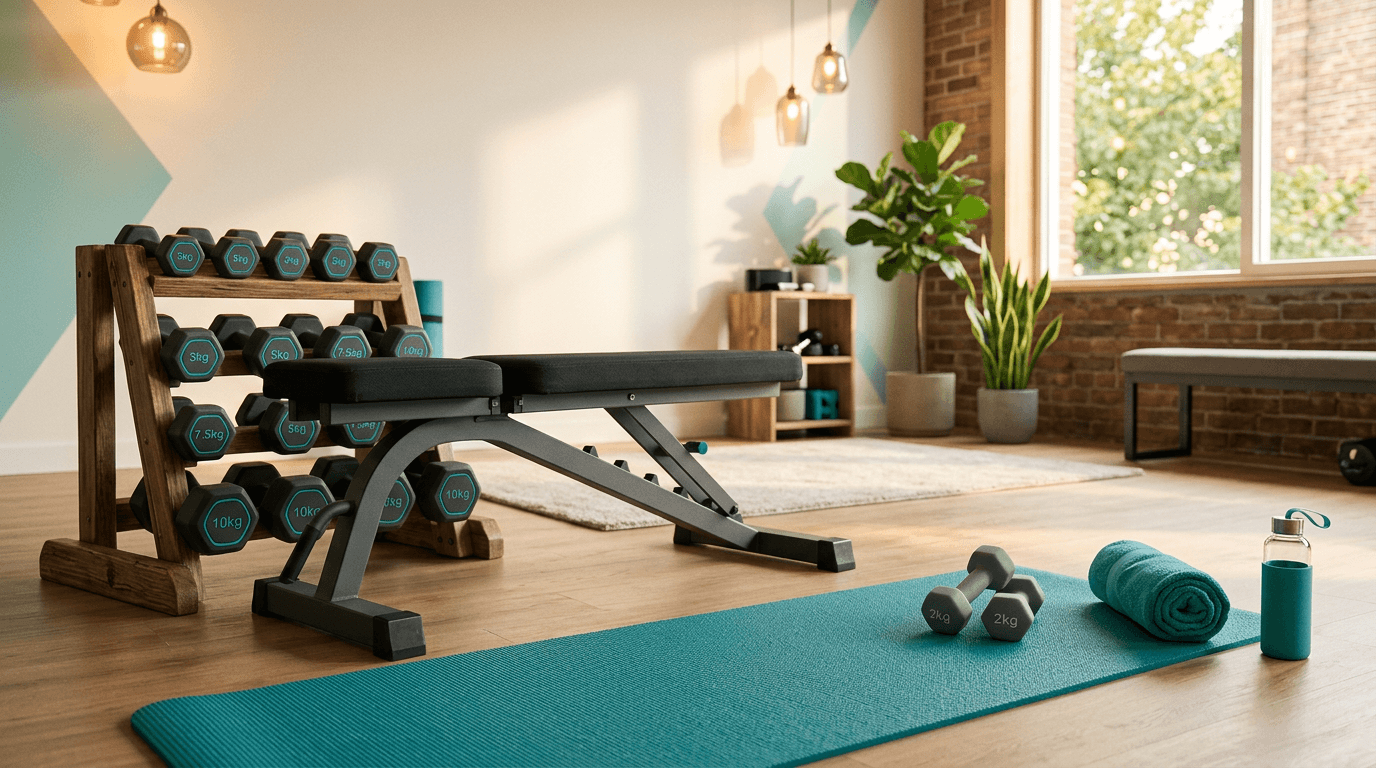
Strength training is one of the most valuable things you can do for your body. That is not an exaggeration. The evidence is overwhelming.
Regular resistance training improves bone density, increases metabolic rate, reduces the risk of type 2 diabetes, lowers blood pressure, improves cardiovascular health, enhances mental health, and — yes — builds muscle and makes you look better.
Despite this, many people avoid it. The gym feels intimidating. The equipment looks confusing. The people who already lift seem like they belong to a different species.
Here is the truth: strength training is far simpler than the fitness industry makes it seem. You do not need a complicated programme. You do not need expensive equipment. You do not need to be fit before you start. You just need to understand a few fundamental principles and then show up consistently.
This is a no-nonsense guide for people who have never lifted weights or who tried and stopped. No jargon. No unnecessary complexity. Just what you need to know to start and keep going.
Why Strength Training Matters (Beyond Looking Good)
The cosmetic benefits get all the attention, but they are arguably the least important reason to strength train.
Bone Density
Resistance training stimulates bone growth by placing mechanical stress on the skeleton. This is especially important as you age. After 30, bone density naturally declines. Strength training slows — and can partially reverse — this decline. For women approaching and past menopause, strength training is one of the most effective strategies for osteoporosis prevention.
Metabolic Health
Muscle is metabolically active tissue. The more muscle mass you have, the higher your resting metabolic rate — meaning you burn more calories at rest. Strength training also improves insulin sensitivity and glucose metabolism, reducing the risk of type 2 diabetes.
Longevity
Multiple large studies have found that grip strength (a proxy for overall muscle strength) is one of the strongest predictors of all-cause mortality. Stronger people live longer, independent of cardiovascular fitness. The ability to get up from the floor unassisted, carry groceries, and maintain balance as you age depends on muscular strength.
Mental Health
Strength training has been shown to reduce symptoms of both anxiety and depression. The mechanisms include endorphin release, improved self-efficacy, better sleep quality, and neurochemical changes. The effect is comparable to medication for mild to moderate depression in some studies.
Injury Prevention
Strong muscles, tendons, and ligaments are more resistant to injury. Strength training also improves joint stability and corrects muscular imbalances that can lead to pain and dysfunction over time.
The Fundamental Movement Patterns
Every effective strength training programme is built around five or six fundamental movement patterns. These patterns are how the human body is designed to move. They work every major muscle group and provide the foundation for more advanced exercises later.
1. Squat
What it trains: Quadriceps, glutes, hamstrings, core.
Bodyweight version: Bodyweight squat. Stand with feet shoulder-width apart, push your hips back and down as if sitting into a chair, keeping your chest up and knees tracking over your toes. Go as deep as you can while maintaining a neutral spine.
Weighted version: Goblet squat (holding a dumbbell at chest height), barbell back squat, front squat.
Why it matters: The squat is the most functional movement pattern. You squat every time you sit down, stand up, or pick something up. Building squat strength protects your knees, hips, and lower back.
2. Hinge
What it trains: Posterior chain — hamstrings, glutes, lower back, core.
Bodyweight version: Good mornings (hands behind head, hinge at the hips while keeping back flat), single-leg Romanian deadlift (unweighted).
Weighted version: Romanian deadlift, conventional deadlift, kettlebell swing.
Why it matters: The hip hinge teaches you to lift things safely by loading your hips rather than your lower back. It is the foundational movement for deadlifts and is essential for preventing back injuries.
3. Push
What it trains: Chest, shoulders, triceps, core.
Bodyweight version: Push-up (from knees if needed, progressing to full push-ups). Wall push-ups for complete beginners.
Weighted version: Dumbbell bench press, overhead press, incline press.
Why it matters: Pushing movements build upper body strength for everyday tasks — pushing doors, lifting objects overhead, getting up from the ground.
4. Pull
What it trains: Back, biceps, rear shoulders, forearms.
Bodyweight version: Inverted row (using a low bar or TRX straps), band-assisted pull-up.
Weighted version: Dumbbell row, barbell row, lat pulldown, pull-up/chin-up.
Why it matters: Most people have weak pulling muscles relative to their pushing muscles, leading to poor posture and shoulder problems. Pulling movements correct this imbalance.
5. Carry
What it trains: Core, grip, shoulders, entire posterior chain.
How to do it: Pick up something heavy and walk with it. Farmer's carry (weight in both hands), suitcase carry (weight in one hand), overhead carry.
Why it matters: Carrying builds total-body stability and grip strength. It trains your core in a functional way that planks and crunches cannot replicate. Grip strength, as mentioned, is one of the best predictors of longevity.
Optional: Lunge
What it trains: Quadriceps, glutes, hamstrings, balance.
Bodyweight version: Forward lunge, reverse lunge, walking lunge.
Weighted version: Dumbbell walking lunge, Bulgarian split squat.
Why it matters: Single-leg work corrects left-right imbalances and builds stability. If you do sports or run, lunges are particularly valuable for injury prevention.
Starting With Bodyweight
If you have never strength trained before, start with bodyweight exercises for the first 2-4 weeks. This accomplishes several things:
- You learn the movement patterns without the complexity of managing external weight
- Your connective tissues (tendons, ligaments) begin to adapt, reducing injury risk when you add weight
- You build a baseline of strength and coordination
- You develop the habit of training before adding the intimidation factor of a gym
A simple bodyweight programme:
| Exercise | Sets | Reps |
|---|---|---|
| Bodyweight squat | 3 | 10-15 |
| Push-up (knees if needed) | 3 | 8-12 |
| Inverted row or band pull | 3 | 8-12 |
| Glute bridge (hinge pattern) | 3 | 12-15 |
| Plank | 3 | 20-30 seconds |
| Farmer's carry (water jugs, bags) | 2 | 30 seconds |
Do this 3 times per week with at least one rest day between sessions. When you can complete all sets and reps with good form, you are ready to progress.
Progressing to Free Weights
After 2-4 weeks of bodyweight training, start adding external resistance. Dumbbells are the most beginner-friendly option. They are available at most gyms, relatively inexpensive to buy for home use, and allow a natural range of motion.
Choosing Starting Weights
Start lighter than you think you need to. The first few sessions with weights are about learning the movement with the added load, not about challenging yourself. You should finish each set feeling like you could have done 3-4 more reps.
A reasonable starting point for most beginners:
- Goblet squat: 8-12 kg dumbbell
- Dumbbell bench press: 6-10 kg per hand
- Dumbbell row: 8-12 kg per hand
- Romanian deadlift: 10-16 kg per hand
- Overhead press: 4-8 kg per hand
These are rough guidelines. Adjust based on your current strength level. The weight should be challenging but never compromise your form.
Sets and Reps for Beginners
3 sets of 8-12 reps is the standard beginner recommendation, and it works. This rep range balances muscle building, strength development, and skill acquisition.
Here is what the numbers mean:
- Reps (repetitions): The number of times you perform a movement in a row. One squat = one rep.
- Sets: A group of reps performed consecutively, followed by a rest period. 3 sets of 10 means: do 10 reps, rest, do 10 more, rest, do 10 more.
- Rest between sets: 60-90 seconds for beginners. You should feel recovered enough to do the next set with good form. Do not rush.
When to increase weight: When you can complete all prescribed sets and reps with good form for two consecutive sessions, increase the weight by the smallest available increment (usually 1-2.5 kg). This is progressive overload — the most important principle in strength training.
Structuring Your Week
For beginners, three sessions per week is the sweet spot. It provides enough stimulus for adaptation while allowing adequate recovery.
Option 1: Full Body, 3 Days Per Week
The simplest and most effective approach for beginners.
Monday / Wednesday / Friday (or any 3 non-consecutive days):
- 1 squat variation
- 1 hinge variation
- 1 push variation
- 1 pull variation
- 1 core or carry exercise
Each session hits every movement pattern. Vary the specific exercises between sessions for variety if you like (goblet squat on Monday, Bulgarian split squat on Wednesday, for example).
Option 2: Upper/Lower Split, 4 Days Per Week
Once you have been training for 3-6 months and want to increase volume:
Monday/Thursday: Lower body (squat, hinge, lunge, calf raise, core) Tuesday/Friday: Upper body (bench press, row, overhead press, pull-up/pulldown, curl, tricep work)
This allows more exercises per muscle group while still providing adequate recovery.
Common Mistakes Beginners Make
Going Too Heavy Too Soon
The most common mistake. Ego lifting — choosing weights that are too heavy in order to feel impressive — leads to poor form, injury, and slower progress. Light weight with perfect form will always produce better results than heavy weight with compromised form.
Skipping the Warm-Up
Five to ten minutes of light cardio (walking, cycling, rowing) followed by dynamic stretches and warm-up sets prepares your muscles, joints, and nervous system for the work ahead. Skipping this increases injury risk significantly.
Changing Programmes Too Frequently
A good programme needs 8-12 weeks to produce meaningful results. Switching exercises or routines every few weeks means you never develop proficiency at any movement and never allow the adaptation process to complete. Pick a programme and stick with it.
Neglecting Recovery
This is where recovery tracking becomes valuable. Beginners often underestimate how much recovery their body needs, especially in the first few weeks when delayed onset muscle soreness (DOMS) is at its worst.
A wearable like Penng provides daily recovery scores (0-100%, green/yellow/red) that help you gauge whether your body is ready for another hard session or needs additional rest. When your recovery score is green, push hard. When it is red, either rest or train at lower intensity.
Penng also tracks sleep quality, which is when the majority of muscle recovery occurs. If your sleep scores are consistently low, your strength gains will stall regardless of how well your programme is designed.
Not Eating Enough
Strength training creates the stimulus for muscle growth, but nutrition provides the raw materials. You cannot build muscle in a significant caloric deficit. Beginners should ensure adequate protein intake (1.6-2.2 grams per kilogram of body weight per day) and sufficient total calories to support recovery and growth.
Equipment You Actually Need
To start at home:
- A set of adjustable dumbbells or 2-3 pairs of fixed dumbbells (light, medium, heavy for your level)
- A pull-up bar or resistance bands for pulling exercises
- A bench or sturdy chair
At a gym:
- Most gyms have everything you need. Prioritise access to dumbbells, a bench, a barbell and squat rack, and a cable machine or lat pulldown.
What you do not need:
- Gloves (they reduce grip strength development)
- A weight belt (beginners should learn to brace their core naturally first)
- Machines for every exercise (free weights are generally superior for beginners because they require stabilisation)
- Supplements (focus on real food first)
Progressive Overload: The Non-Negotiable
Progressive overload is the principle that you must gradually increase the demands on your body to continue making progress. Without it, your body adapts to the current stress and stops changing.
For beginners, progressive overload is straightforward: add weight when you can complete your prescribed sets and reps with good form. In the first 6-12 months of training, you should be able to add weight almost every week. This is called "novice gains" — the rapid strength development that occurs when your nervous system learns to recruit muscle fibres more efficiently.
As you advance, progression slows. But for now, focus on consistently showing up and gradually lifting heavier things.
Tracking Your Progress
Keep a training log. It does not need to be elaborate. Record:
- The exercise
- The weight used
- Sets and reps completed
- How it felt (easy, moderate, hard)
This log serves two purposes: it ensures you know what to lift next session (because you progressively overload), and it provides motivation as you look back and see how far you have come.
A wearable adds another dimension to tracking. For recommendations on which devices work best for the gym, see our guide to the best fitness trackers for gym use. When you can see that your strength sessions produce specific strain scores, that your recovery follows a predictable pattern, and that your best sessions correlate with green recovery days and good sleep, you start making smarter decisions about training.
Penng tracks heart rate continuously during workouts (you manually start and end each session in the app), giving you strain data for every training session alongside your recovery and sleep metrics.
Frequently Asked Questions
How many days per week should a beginner lift weights?
Three days per week of full-body training is ideal for beginners. This provides sufficient stimulus for strength and muscle gains while allowing adequate recovery between sessions. Ensure at least one rest day between training days. After 3-6 months, you can consider moving to a 4-day split if desired.
How long before I see results from strength training?
Neurological adaptations (your nervous system learning to recruit muscle fibres more efficiently) begin immediately. You will feel stronger within 2-4 weeks. Visible muscle growth typically becomes noticeable after 6-12 weeks of consistent training with adequate nutrition. Body composition changes (less fat, more muscle) may be apparent even sooner.
Can I do strength training and cardio on the same day?
Yes. If your primary goal is strength, do your strength training first when you are fresh, followed by cardio. If endurance is your primary goal, reverse the order. Ideally, separate intense cardio and heavy strength sessions by at least 6-8 hours. Light Zone 2 cardio after a strength session is generally fine and may aid recovery.
Do I need a personal trainer to start?
A personal trainer is helpful but not essential. Many beginners successfully learn the fundamental movements from instructional videos and careful practice with light weights. If you can afford a trainer for 3-5 sessions to learn proper form for the main lifts (squat, deadlift, bench press, overhead press), that investment pays dividends. After that, you can train independently.
Is strength training safe for older adults?
Absolutely. Strength training is particularly important for older adults because it combats age-related muscle loss (sarcopenia), maintains bone density, improves balance, and reduces fall risk. Start lighter and progress more slowly than younger adults, and consider working with a qualified trainer initially if you have pre-existing conditions or mobility limitations.
Ready to build a training plan that matches your body? Take the free quiz at penng.ai/quiz and get started in 2 minutes.